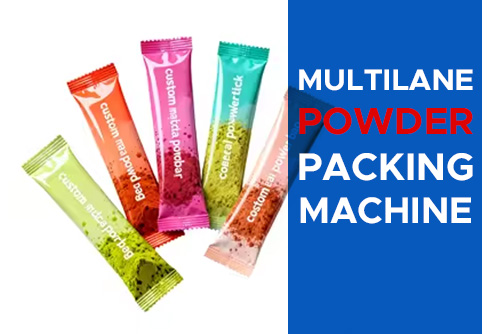
banner
  • Factors That Affect The Efficiency of Multi-Lane Powder Packing Machine
    Factors That Affect The Efficiency of Multi-Lane Powder Packing Machine Jun 12, 2026
    As demand for single-serve and convenient packaging continues to grow, multi-lane powder packaging machines have become a popular solution for manufacturers seeking high production output. These machines are widely used for packaging products such as coffee powder, milk powder, protein powder, seasoning powder, pharmaceutical powders, and nutritional supplements.   However, achieving maximum production speed and efficiency depends on more than simply choosing a machine with multiple lanes. Several factors can significantly influence the overall performance of a multi-lane powder packaging machine. Understanding these factors can help manufacturers optimize productivity, reduce downtime, and improve packaging quality.   1. Number of Packaging Lanes The number of lanes is one of the most important factors affecting machine output. Generally, increasing the number of lanes allows more sachets to be produced simultaneously.   For example, an 8 lane powder packaging machine can typically achieve much higher production rates than a 4 lane powder packing machine under the same operating conditions. However, adding more lanes also requires greater precision in film tracking, dosing accuracy, and sealing synchronization.   Manufacturers should select the appropriate lane configuration based on their production requirements, available space, and budget.   2. Powder Characteristics Not all powders behave the same during the packaging process. The physical properties of the product can directly impact filling speed and efficiency.   Key characteristics include:   • Particle size • Bulk density • Flowability • Moisture content • Tendency to clump or bridge   Free-flowing powders such as sugar or instant drink powders can be filled quickly and consistently. In contrast, fine or sticky powders may require specialized feeding systems and slower operating speeds to maintain filling accuracy.   Understanding product characteristics is essential when selecting the appropriate dosing system and machine configuration.   3. Accuracy of the Auger Filling System Most multi lane powder packaging machines use auger fillers to measure and dispense powder products. The performance of the auger system directly affects both speed and packaging accuracy.   A well-designed auger filler ensures:   • Consistent filling weights • Reduced product waste • Stable operation at high speeds • Improved packaging quality   Servo driven auger systems are often preferred because they offer precise control and fast response times, allowing the machine to maintain accuracy even during high speed production.   4. Packaging Film Quality Packaging film plays a critical role in machine performance. Poor quality film can lead to tracking issues, sealing defects, and production interruptions.   High quality packaging film offers:   • Uniform thickness • Stable tensile strength • Consistent sealing properties • Smooth machine operation   Film materials such as PET/PE, OPP/CPP, and laminated structures are commonly used for powder sachets. Selecting the right film helps reduce downtime and ensures reliable packaging performance.   5. Sealing System Performance The sealing process must keep pace with the machine's production speed while maintaining package integrity.   Factors that influence sealing performance include:   • Sealing temperature • Pressure settings • Dwell time • Film compatibility   If sealing parameters are not properly adjusted, issues such as weak seals, wrinkles, or package leakage may occur. Advanced temperature control systems help maintain stable sealing quality even during long production runs.   6. Servo Motor and Control System Technology Modern multiline powder packing machine increasingly rely on servo driven technology and intelligent control systems.   High performance servo motors provide:   • Faster machine response • Precise positioning • Smooth film pulling • Improved synchronization between machine components   Meanwhile, PLC control systems and touch screen interfaces allow operators to quickly adjust machine settings, monitor production data, and troubleshoot issues efficiently.   These technologies contribute significantly to higher overall equipment efficiency.   7. Machine Maintenance and Operator Training Even the most advanced packaging machine cannot perform efficiently without proper maintenance and skilled operation.   Regular maintenance helps prevent:   • Unexpected breakdowns • Component wear • Filling inconsistencies • Reduced production speeds   In addition, well-trained operators can quickly identify potential issues, optimize machine settings, and minimize downtime during product changeovers.   Preventive maintenance programs are often one of the most cost-effective ways to improve long-term production efficiency.   8. Environmental Conditions Factory conditions can also affect machine performance, particularly when packaging sensitive powder products.   Factors such as temperature, humidity, and dust levels may influence powder flow characteristics and machine reliability.   Maintaining a clean and controlled production environment can help ensure stable operation, reduce contamination risks, and improve overall packaging quality.   Conclusion The speed and efficiency of a multilane powder packing machine depend on a combination of factors, including lane configuration, powder characteristics, filling system performance, packaging materials, sealing quality, automation technology, maintenance practices, and production environment.   By carefully optimizing each of these elements, manufacturers can maximize output, improve packaging consistency and reduce operating costs. As competition continues to increase across industries, investing in the right equipment and production strategies is essential for achieving long-term success in powder packaging operations.   If you are looking for a reliable multi-lane powder packaging solution tailored to your product and production requirements, contact Jason Machinery today. Our team can help you select the ideal machine configuration to achieve higher productivity and packaging efficiency.    
  • Top 8 Industries Using Vertical Multi-Lane Powder Packaging Machines
    Top 8 Industries Using Vertical Multi-Lane Powder Packaging Machines May 23, 2026
    In today’s fast-paced manufacturing industry, packaging efficiency plays a critical role in improving productivity and reducing operational costs. As market demand for single-serve and stick pack products continues to grow, the multi lanes powder packing machine has become an essential solution for manufacturers in food, pharmaceutical and daily-use product industries.   A modern multi-lane powder packaging machine is designed to automatically complete bag forming, dosing, filling, sealing, coding, and cutting processes in one continuous operation. Compared with traditional single-lane equipment, it offers significantly higher output and more stable packaging quality. Below are the top 8 applications of vertical multi-lane powder packaging machines and why they are becoming increasingly popular worldwide.   1. Instant Coffee Powder Packaging Instant coffee is one of the most common applications for a multi-lane powder packing machine. Coffee manufacturers require high-speed production with accurate filling to ensure consistent product weight and appearance. Multi-lane systems can simultaneously produce multiple stick packs, greatly improving production efficiency while maintaining excellent sealing quality.   The slim and portable stick pack format is also highly favored by consumers for travel, office, and on-the-go use.   2. Milk Powder and Dairy Products Milk powder, creamer powder, and nutritional dairy supplements are widely packaged using a multi-lane powder stick pack packing machine. The machine can precisely handle fine powders with excellent flowability control, reducing dust pollution during operation.   For dairy product manufacturers, automated packaging not only improves hygiene standards but also ensures stable product consistency across every sachet.   3. Protein Powder and Nutritional Supplements Health and fitness products continue to grow rapidly in global markets. Protein powder, collagen powder, meal replacement powder, and vitamin supplements are often packed into single-dose stick packs using a multilane packing machine.   This packaging style is convenient for consumers and helps brands create attractive, easy-to-carry products for gyms, travel, and retail stores.   4. Pharmaceutical Powder Packaging The pharmaceutical industry requires extremely precise and hygienic packaging solutions. Antibiotic powders, herbal medicine powders, electrolyte powders, and nutritional medical supplements are commonly packed using a multi-lane powder packaging machine.   Advanced PLC control systems and servo-driven technology ensure accurate dosing and reliable sealing performance, helping manufacturers meet strict industry standards.   5. Spice and Seasoning Powder Packaging Seasoning powders such as chili powder, curry powder, garlic powder, black pepper powder, and soup seasoning powders are ideal products for vertical multi-lane packaging equipment.   A multiline packaging machine allows manufacturers to achieve high-speed production while maintaining uniform sachet sizes and neat package appearance, which is especially important for retail shelf presentation.   6. Beverage Powder Packaging Instant beverage powders, including tea powder, cocoa powder, fruit drink powder, and energy drink powder, are increasingly sold in convenient stick pack formats.   Using a multi-lane powder stick pack packing machine, manufacturers can quickly produce large quantities of compact sachets suitable for supermarkets, vending machines, hotels, and airlines.   7. Functional Food and Health Product Packaging Functional foods such as probiotic powder, enzyme powder, dietary fiber powder, and herbal health powders are becoming increasingly popular among health-conscious consumers.   The flexible design of a multilane packing machine allows manufacturers to customize sachet sizes, filling ranges, and packaging styles according to different market demands.   8. OEM and Contract Packaging Services Many OEM factories and contract packaging companies choose a multi-lane powder packing machine because of its flexibility and high productivity. One machine can often handle multiple product types with simple adjustments, making it ideal for factories that process different powder products for various customers.   This versatility helps packaging companies maximize equipment utilization and improve overall production efficiency.   Why More Manufacturers Choose Multi-Lane Powder Packaging Machines Compared with traditional packaging equipment, vertical multi track packing machines offer several important advantages:   High-speed output with multiple lanes running simultaneously Accurate auger filling systems for stable dosing Compact machine structure that saves factory space Reduced labor costs through full automation Consistent sachet appearance and sealing quality Flexible customization for different powder products and bag sizes   As consumer demand for convenient single-serve packaging continues to grow, the market for stick pack powder products is expected to expand even further. Investing in a reliable multiline packaging machine can help manufacturers stay competitive while improving production capacity and packaging quality.   At Jason Machinery, we specialize in high-performance powder packaging solutions designed for various industries and production requirements. If you are looking for a reliable multi-lane powder packing machine, feel free to contact us for professional recommendations and customized packaging solutions.    
  • Top 10 Applications of Multi-Lane Liquid Sachet Packaging Machines
    Top 10 Applications of Multi-Lane Liquid Sachet Packaging Machines Apr 10, 2026
    In today’s fast-paced manufacturing environment, efficiency and convenience are key factors driving packaging innovation. Multi-lane liquid sachet packaging machines have become an essential solution for companies that need to package liquid products in small, portable, and cost-effective formats. By producing multiple sachets simultaneously, these machines significantly improve productivity while maintaining consistent quality.   From food to pharmaceuticals, multi-lane liquid packaging machines are widely used across industries. In this article, we explore the top 10 applications where these machines deliver the most value.   1. Sauce and Condiment Packaging One of the most common applications is packaging sauces and condiments such as ketchup, mayonnaise, soy sauce, chili sauce, and salad dressings. Sachet packaging is ideal for single-use portions, making it popular in restaurants, takeaways, and fast-food chains. Multi-lane packing machines enable high-speed production to meet large-scale demand.   2. Honey and Syrup Packaging Honey, chocolate syrup, maple syrup, and other viscous liquids are frequently packed into small sachets for easy consumption. Multi lane stick pack machines equipped with piston pumps or heated systems ensure accurate filling and smooth flow of thick liquids, maintaining both efficiency and product integrity.   3. Beverage Concentrates and Liquid Drink Mixes Liquid beverage concentrates, energy shots, and flavored syrups are often packaged in stick packs or sachets. These compact packages are convenient for travel and on-the-go consumption. Multi-lane packaging machines allow manufacturers to produce large quantities quickly while keeping packaging uniform.   4. Dairy and Cream-Based Products Products such as coffee creamers, condensed milk, and flavored dairy liquids are also suitable for sachet packaging. The precise dosing system of multi-lane machines ensures consistent portion sizes, which is crucial for maintaining taste and quality standards.   5. Personal Care Products The personal care industry heavily relies on sachet packaging for products like shampoo, conditioner, body wash, lotion, and facial cleansers. Sachets are widely used for sample distribution, promotional campaigns, and travel-size packaging. Multi track packing machines help brands produce these small packs efficiently and at low cost.   6. Pharmaceutical and Healthcare Liquids Liquid medicines, oral solutions, dietary supplements, and herbal extracts are often packaged in small, single-dose sachets. Multi row packaging machines provide high precision and hygienic operation, which are essential for pharmaceutical applications. Advanced control systems ensure accurate filling and compliance with strict quality standards.   7. Chemical and Cleaning Liquids Household and industrial liquids such as detergents, disinfectants, hand sanitizers, and cleaning agents are commonly packaged in sachets. These small packages are convenient for single-use applications or distribution in emerging markets. Multi lane pack machines enable mass production while ensuring leak-proof sealing.   8. Cosmetic Serums and Beauty Products High-value cosmetic liquids such as serums, essences, oils, and skincare treatments are often packaged in sachets for sampling or single-use applications. Multi lane packing machines provide precise filling and attractive packaging, helping brands enhance product presentation and reduce waste.   9. Food Additives and Liquid Seasonings Liquid flavorings, food additives, and seasoning oils are increasingly packaged in small sachets for convenience and portion control. Multi line packaging machines allow manufacturers to meet high demand while maintaining consistent quality and accurate dosing.   10. Emergency and Travel-Size Products Sachet packaging is widely used for emergency supplies and travel kits, including drinking water additives, energy gels, sanitizing liquids, and ready-to-use food supplements. Multilane packing machines are ideal for producing these compact and portable packages at high speed.   Conclusion Multi-lane liquid sachet packaging machines have become a versatile and indispensable solution across multiple industries. Their ability to produce large volumes of uniform and high-quality sachets makes them ideal for applications ranging from food and beverages to pharmaceuticals and personal care products.   As consumer demand for convenience, portability and single-use packaging continues to grow, the importance of multi-lane packaging technology will only increase. For manufacturers looking to improve efficiency, reduce costs, and expand production capacity, investing in multi-lane liquid sachet packaging machines is a smart and future-ready choice.    
  • Building A Complete Liquid Sachet Packaging Line With Multi Lane Packaging Machines
    Building A Complete Liquid Sachet Packaging Line With Multi Lane Packaging Machines Mar 24, 2026
    In many industries, packaging liquid products into small sachets is an efficient and convenient way to deliver products to consumers. To achieve high productivity and automation, manufacturers often build a complete liquid sachet packaging line centered around a multilane packaging machine.   A well-designed packaging line can greatly improve production efficiency, reduce labor costs, and ensure consistent packaging quality.   The Core Machine: Multi-Lane Liquid Packaging Machine At the heart of the packaging line is the vertical multi-lane liquid packaging machine. This machine is responsible for forming sachets from packaging film, filling liquid products, sealing the sachets, and cutting them into finished packages.   Depending on the production capacity requirements, the machine can be configured with multiple lanes to produce dozens or hundreds of sachets per minute.   The use of advanced PLC control systems and touch screen interfaces allows operators to easily control and monitor the entire packaging process.   Liquid Storage and Feeding System Before entering the packaging machine, liquid products are usually stored in a mixing or storage tank.   The feeding system transfers the liquid from the tank to the filling pumps of the packaging machine. This system may include pipelines, filters, and pumps to ensure stable product supply.   For certain products such as sauces or viscous liquids, heating or mixing systems may also be added to maintain consistent product quality.   Automatic Coding System Many manufacturers need to print production dates, batch numbers, or expiration dates on the sachets.   An automatic coding machine can be integrated into the packaging line to print this information directly on the packaging film during the packaging process.   This ensures clear and accurate product identification while maintaining high production speed.   Conveying and Collection System After the sachets are produced, they are transported through a conveyor system.   The conveyor helps organize and move the finished sachets to the next stage of packaging. This stage may involve counting, grouping or collecting the sachets.   Proper conveying systems improve workflow efficiency and prevent product accumulation.   Secondary Packaging Equipment In many factories, sachets are not sold individually but packed into boxes or cartons.   Therefore, additional equipment such as counting machines, cartoning machines, and case packing machines can be integrated into the packaging line.   These systems automatically count sachets, place them into retail boxes, and pack the boxes into shipping cartons.   Palletizing System For large-scale production facilities, automated palletizing systems can be added at the end of the line.   Robotic palletizers or gantry palletizing machines automatically stack cartons onto pallets, preparing them for storage or shipment.   This step further reduces manual labor and improves logistics efficiency.   Advantages of a Complete Packaging Line Building a complete liquid sachet packaging line offers several benefits.   First, it improves overall production efficiency by connecting multiple processes into a continuous automated workflow.   Second, it reduces labor costs because fewer operators are required to manage the packaging process.   Third, automation improves packaging consistency and reduces human error.   Finally, a complete packaging line provides better scalability. Manufacturers can increase production capacity by upgrading or adding equipment when needed.   Conclusion A complete liquid sachet packaging line built around a multi lane packaging machine provides a powerful solution for manufacturers that require high-speed, large-scale liquid packaging.   By integrating filling, sealing, coding, conveying, and secondary packaging systems, companies can create a highly efficient and reliable production process that supports long-term business growth.    
  • What Is a Vertical Multi-Lane Liquid Packaging Machine and How Does It Work?
    What Is a Vertical Multi-Lane Liquid Packaging Machine and How Does It Work? Mar 13, 2026
    In modern manufacturing, efficiency and precision are essential for companies that need to package liquid products in small sachets. A vertical multi-lane liquid packing machine is designed to meet these demands by producing multiple sachets simultaneously, significantly increasing packaging speed and productivity. These machines are widely used in industries such as food and beverage, pharmaceuticals, cosmetics, and chemicals.   What Is a Vertical Multi-Lane Liquid Packaging Machine? A vertical multi lane liquid packaging machine is an automated packaging system that forms, fills, and seals liquid sachets in multiple lanes at the same time. Instead of producing one sachet per cycle, the machine can produce several sachets simultaneously, depending on the number of lanes configured.   Typically, these machines are designed to package small quantities of liquids such as sauces, honey, shampoo, beverages, condiments, or pharmaceutical liquids into stick packs or sachets. The packaging process is highly automated and requires minimal manual intervention.   The machine is called “vertical” because the packaging film moves vertically through the forming system, while the liquid product is filled from the top.   Key Components of the Machine A vertical multi-lane liquid packaging machine consists of several important components that work together to complete the packaging process.   The film roll holder holds the packaging film and feeds it into the machine. The film is then guided through a series of rollers to ensure proper tension and alignment.   The forming system shapes the film into multiple vertical lanes, creating individual channels where the sachets will be formed.   The filling system is responsible for accurately dispensing liquid into each sachet. Depending on the product characteristics, the machine may use piston pumps, peristaltic pumps, or flow meter systems.   The sealing system performs vertical and horizontal sealing, ensuring that each sachet is properly sealed to prevent leakage.   Finally, the cutting device separates the finished sachets, creating individual packages ready for collection or further packaging.   How the Machine Works The operation process of a vertical multi-lane liquid packaging machine can be divided into several steps.   First, the packaging film is unwound from the film roll and guided through the forming system. The film is folded and shaped into multiple vertical channels.   Next, the machine performs vertical sealing to create the back seal or side seals for each lane. This step forms long tubular sachets.   Once the sachet structure is formed, the liquid filling system dispenses a precise amount of product into each sachet simultaneously.   After filling, horizontal sealing bars seal the top and bottom of each sachet, creating individual packages.   Finally, the cutting system separates the sachets into individual units or strips depending on the required packaging style.   This entire process runs continuously and can produce dozens or even hundreds of sachets per minute depending on the machine configuration.   Advantages of Multi-Lane Liquid Packaging One of the biggest advantages of a multi-lane packaging machine is its high production efficiency. Because multiple sachets are produced at the same time, the overall output is much higher compared to single-lane machines.   Another advantage is space efficiency. A multi-lane machine can achieve the output of several single-lane machines while occupying much less factory space.   Automation is another important benefit. Modern machines are equipped with PLC control systems and touch screens that allow operators to easily adjust parameters such as filling volume, sealing temperature, and production speed.   Additionally, these machines provide consistent packaging quality. Accurate dosing systems ensure that each sachet contains the correct amount of product.   Common Applications Vertical multi-lane liquid packaging machines are used for a wide variety of products.   In the food industry, they are commonly used for packaging ketchup, soy sauce, honey, salad dressing, and beverage concentrates.   In the personal care industry, these machines package shampoo, conditioner, lotion, and facial cleansers into small sachets.   In the pharmaceutical industry, they are used to package oral liquids, supplements, and medical solutions.   They are also widely used in the chemical industry for products such as detergents, disinfectants, and cleaning liquids.   Conclusion A vertical multilane liquid packing machine is an efficient and reliable solution for high-speed sachet packaging. By forming, filling, sealing, and cutting multiple sachets simultaneously, these machines significantly increase production capacity while maintaining high packaging accuracy.   For manufacturers that require large-scale sachet production, investing in a multi-lane liquid packaging machine can greatly improve efficiency, reduce labor costs, and ensure consistent product quality.    
  • Applications of Multi-Lane Vertical Packaging Machines in Food and Non-Food Industries
    Applications of Multi-Lane Vertical Packaging Machines in Food and Non-Food Industries Dec 13, 2025
    Multi-lane vertical packaging machines have become a core solution in modern manufacturing for achieving high efficiency, stable quality, and scalable production capacity. By operating multiple independent packaging lanes simultaneously, these systems enable continuous high-volume production of sachets or pouches within a limited footprint. As an efficient multi lane pouch packaging system, this type of equipment has expanded its application scope from food and pharmaceuticals to daily chemicals and industrial products.     In the food industry, multi-lane vertical packaging machines are widely used for packing granule, powder, and liquid products such as sugar, salt, coffee, seasonings, sauces, and edible oils. Multi-lane synchronized operation not only meets the strong market demand for portion-controlled and single-serve packaging, but also ensures a high level of consistency in weighing accuracy and sealing quality across all lanes. This significantly improves the standardization and reliability of the entire production line.   For powder and granule materials, an automatic multi lane packing machine integrates bag forming, dosing, filling, sealing, and cutting into a single continuous process. This high level of automation greatly reduces manual intervention, helping manufacturers control labor costs and enhance hygiene standards. At the same time, flexible parameter adjustment allows quick changeover between different products, improving the production line’s ability to handle multi-variety and small-batch orders.   When packaging liquid, paste, or semi-viscous products, machines are commonly equipped with piston pumps or servo-driven filling systems. This configuration is suitable for products with varying viscosities, such as ketchup, shampoo, detergents, and cosmetic creams. Even during continuous operation, high-speed multi lane packaging equipment maintains stable filling accuracy and reliable sealing performance, making it a dependable solution for large-scale production in fast-moving consumer goods industries.   Customization is another major advantage of this technology. Customizable multi lane sachet packing equipment allows manufacturers to select the number of lanes, sachet dimensions, and sealing styles such as three-side seal, four-side seal, or back seal formats based on product characteristics. Optional features including date coding, easy-tear notches, and special seal patterns can also be integrated, enabling one machine to meet diverse market packaging requirements.   As factory layouts become increasingly compact, space efficiency has become a key consideration. A compact multi lane vertical form fill seal system can achieve equal or higher output while occupying significantly less floor space than multiple single-lane machines. This compact and integrated design simplifies production line layout, supports process optimization, and provides greater flexibility for future capacity expansion.   In the pharmaceutical and nutraceutical sectors, this type of equipment is often referred to as a multi track packing machine. It is widely used for packaging products such as vitamins, probiotics, and powdered supplements. With its clean structure, stable accuracy, and compliance-oriented design, the machine effectively prevents cross-contamination while ensuring precise and safe dosage for each individual sachet.   Beyond food and pharmaceuticals, multi-lane vertical packaging machines also perform exceptionally well in agrochemical, industrial, and household chemical industries. Products such as fertilizers, lubricants, and various additives can be packaged efficiently and reliably. Their strong material adaptability and consistent packaging quality make them a versatile solution for cross-industry production.   In summary, multi-lane vertical packaging machines combine high-speed output, precise control, flexible configuration, and space-saving design into a single integrated solution. They have become a critical component in automated packaging lines across both food and non-food industries, enhancing production efficiency and product consistency while enabling manufacturers to respond quickly to changing market demands and remain competitive on a global scale.    
  • Vertical Multilane Packing Machine: How Synchronous Multi-lane Operation Doubles Production Capacity
    Vertical Multilane Packing Machine: How Synchronous Multi-lane Operation Doubles Production Capacity Nov 22, 2025
    In modern industrial production, efficiency improvement is always a core pursuit. Vertical multi-lane packaging machines, through their unique synchronous multi-lane working mode, maximize this concept, becoming a key technology for doubling packaging production capacity.   Basic Principles of Synchronous Multi-lane Operation Traditional single lane packaging machines perform bag making, filling, and sealing processes sequentially, completing only one bag per cycle. Vertical Multi lane packaging machines, essentially, integrate multiple independent packaging units within a single machine frame. These units share a power source and control system but operate in parallel, like multiple independent production lines working collaboratively on the same platform.   The workflow can be summarized as follows: film material is drawn and shaped through multiple channels, each channel independently completing metering, filling, and heat sealing, ultimately outputting multiple lanes of packaged products. This design allows for the simultaneous production of several or even dozens of packaging bags within a single machine cycle, thus achieving several times the output of a single lane machine per unit time.   Core Elements for Doubling Production Capacity Multi-lane synchronous technology is not simply a matter of quantity aggregation. Its efficient operation relies on the precise coordination of several core elements.   Precise Synchronization Control Technology: This is the "brain" of Multi-lane synchronization. Through highly integrated PLCs (Programmable Logic Controllers) and servo drive systems, the operating rhythm of each packaging unit is ensured to be highly consistent. Even a slight delay or lead in any lane can cause system malfunction. Therefore, real-time and accurate control is the primary prerequisite for stable, high-speed production.   Independent and Efficient Metering and Filling System: Each lane is typically equipped with an independent metering device, such as a miniature screw, measuring cup, or combination scale. These systems must be responsive and highly accurate, ensuring that each lane accurately completes material filling within a very short synchronization cycle, avoiding disruption to the overall rhythm due to waiting for one lane.   Optimized Space Layout and Material Supply: Compactly arranging multiple packaging units within a limited space requires precise mechanical design. Simultaneously, the feeding system (whether it's film rolls or materials to be packaged) must be able to stably and adequately meet the production needs of multiple lanes simultaneously, avoiding becoming a bottleneck.   Comprehensive Benefits of Increased Capacity The most direct benefit of this synchronous working mode is a significant increase in production capacity. For example, the theoretical maximum speed of an 8 lanes packaging machine can reach 8 times that of a single lane machine. For industries requiring large-scale production, such as food, pharmaceuticals, and daily chemicals, this means meeting huge market demands with less equipment investment and factory space.   Furthermore, increased capacity also leads to optimized overall costs. Higher output per unit time reduces equipment depreciation, energy consumption, and labor costs. Simultaneously, the multi-lane design enhances production flexibility, allowing for flexible adjustments to the number of operating lanes or the parameters of each lane according to different product needs, enabling rapid switching between small batches and multiple product types.   In summary, the vertical multi lane packaging machine, through precise mechanical design, intelligent control system, and efficient actuators, transforms multi-lane synchronization from a concept into reality. It is not merely a simple parallel arrangement of mechanical structures, but a system solution deeply integrating automation and control technologies. So It provides enterprises with a powerful impetus for a leapfrog increase in packaging capacity in the face of fierce market competition.   If you would like to learn more about how Jason Packing Machinery's latest multi-lane packing machine can revolutionize your production line, please feel free to contact us. Our professional team will provide you with detailed technical solutions and customized services. We look forward to your inquiry and look forward to working together to usher in a new era of efficient packaging.    
  • Working Principle and Core Components Of Doypack Packaging Machines
    Working Principle and Core Components Of Doypack Packaging Machines Oct 17, 2025
    As an efficient and precise automated device, a doypack packaging machine's core mission is to automatically complete a series of operations, including bag removal, filling, and sealing, for premade bags (such as stand up pouches, flat bags, and gusseted bags). Its workflow resembles the tireless work of a skilled worker, with each movement precisely coordinated. Together, they form a continuous, efficient packaging production line.   The basic workflow and the synergy between its core components can be understood through the following key steps.   1. Bag Removal and Separation Workflow: First, a stack of premade bags is placed in a bag storage area. A bag removal device (typically a robotic arm equipped with vacuum suction cups) moves to the bag storage area, applies negative pressure to the top bag, and then precisely removes it and transfers it to the bag opening station.   The core of this process is the vacuum generation system and bag storage area. The vacuum suction cups ensure stable and reliable bag removal. The sophisticated bag storage area design accommodates bags of varying sizes and materials, ensuring that only one bag is separated at a time. This prevents double or multiple bagging. This is the primary prerequisite for stable production.   2. Bag Opening Workflow: After the bag arrives at the bag opening station, it needs to be opened in preparation for filling. Mechanical grippers grasp the sides of the bag. Then, a special device (which may be counter-moving suction cups, bag-opening grippers, or a retractable "bag opener") extends into the bag opening and opens it.   The bag opening device is key to automation. It typically combines a bag-gripping robot with a bag-opening suction cup. For bags prone to sticking or lightweight, an air blowing device may also be included. By blowing a small amount of air into the bag opening, it assists in separating and opening the bag, ensuring an unobstructed filling path.   3. Weighing and Filling Workflow: Once the bag opening is stably opened, the device sends a signal, prompting the filling machine to immediately take action, injecting a predetermined amount of product (such as powder, granules, liquid, or bulk) into the bag through the dispensing nozzle.   This is the key step in determining packaging accuracy. Metering systems (such as high-precision scales, screw dosing machines, liquid pumps, or volumetric cups) ensure that each bag meets the specified weight or volume. The design of the filling mechanism is also crucial and needs to be optimized based on the product's characteristics (such as flowability, fragility, and adhesiveness) to prevent dust, dripping, and damage to the product.   4. Venting and Sealing Workflow: For products that require freshness preservation (such as potato chips and coffee), after filling and before sealing, the equipment performs vacuum evacuation and/or fills the bag with a protective gas such as nitrogen. The bag opening is then cleaned and smoothed before being conveyed to the heat sealing unit.   This step relies on the heat sealing system. Under precisely controlled temperature, pressure, and time, the heat sealing strip heats and fuses the heat sealing material inside the bag opening, forming a secure seal. The quality of the seal directly determines the product's shelf life and leak-proof performance.   5. Forming and Output Workflow: After sealing, the bag is released and transported via a conveyor belt. During the delivery process, the bags may pass through a shaping mechanism to flatten or reshape them, giving them a smoother and more aesthetically pleasing appearance for subsequent cartoning and palletizing.   The conveyor system and shaping mechanism are the final safeguards. They ensure that finished products leave the machine in a neat and uniform manner, laying the foundation for subsequent automated processing steps such as labeling, cartoning, and robotic palletizing.   In summary, the premade bag packing machine, through these five interconnected and precise steps, transforms individual premade bags and bulk products into uniformly packaged products, perfectly demonstrating the unparalleled pursuit of efficiency, precision, and reliability in modern industrial automation.    
  • The Core of the Factory of the Future: How Can Smart Packaging Production Lines Achieve "Zero" Downtime?
    The Core of the Factory of the Future: How Can Smart Packaging Production Lines Achieve "Zero" Downtime? Sep 13, 2025
    In the fiercely competitive modern manufacturing industry, production efficiency is paramount. For any company reliant on packaging, unplanned downtime in a packaging production line means significant losses. Order delays and wasted production capacity increased maintenance costs and damaged customer reputation. Therefore, "zero" downtime has become one of the ultimate goals pursued by factory managers. This doesn't mean absolutely constant downtime, but rather the use of intelligent technology to minimize unplanned downtime and minimize planned maintenance time. The rise of smart packaging production lines is central to achieving this vision.   The Constraints of Traditional Downtime and the Dawn of Intelligence Traditional packaging equipment typically follows a "post-event maintenance" or fixed "preventive maintenance" model. The former means that repairs aren't performed until the equipment misfires or malfunctions, after losses have already occurred. The latter relies on time-based or periodic maintenance, which can lead to unnecessary maintenance when the equipment is fully healthy and failures can be anticipated. Both models have blind spots and cannot truly prevent unplanned downtime.   Smart packaging production lines, by integrating cutting-edge technologies such as the Internet of Things (IoT), artificial intelligence (AI), big data analytics, and digital twins, transform reactive maintenance into predictive maintenance, bringing downtime to nearly zero.   Three Intelligent Pillars for Achieving Zero Downtime 1.Internet of Things (IoT): The "Neural Network" of Equipment Every piece of equipment in a smart production line (from fillers and carton sealers to palletizing robots) is equipped with numerous sensors. These sensors, like the equipment's "nerve endings," continuously collect critical data 24/7, including motor current, bearing vibration frequency, machine body temperature, operating speed, and pressure. This real-time data is aggregated to the cloud or local data center via an IoT gateway, providing a continuous "fuel" for the entire predictive system. Without IoT, predictive maintenance is a dead end.   2.Big Data and AI: The "Intelligent Brain" for Early Warning and Decision-Making Massive amounts of real-time data are meaningless in themselves; they must be analyzed and interpreted. Artificial intelligence algorithms and machine learning models act as the "brain." By continuously learning from historical data, they can identify differences in data patterns between healthy equipment and those that indicate a failure. For example, AI can discern a subtle but increasing abnormal fluctuation in the vibration frequency of a bearing, predicting its potential failure within 72 hours. The system then automatically generates a warning work order, notifying the maintenance team to replace the bearing during the next scheduled window (such as a shift handover), transforming an unplanned downtime that could have lasted several hours into a planned maintenance session that takes only ten minutes.   3.Digital Twin: "Sandboxing" in the Virtual World Digital twin technology creates a virtual, identical digital model of the physical production line. This virtual model mirrors the physical line's status in real time. Maintenance personnel can conduct "sandboxing" on the digital twin: simulating new production parameters, testing maintenance plans, and even conducting operator training, without interrupting actual production. Upon receiving an AI-generated fault warning, engineers can pinpoint the problem, rehearse repair procedures, and prepare necessary spare parts on the digital twin, enabling precise and accurate repairs during the actual operation, significantly reducing repair time.   Conclusion Achieving zero downtime on smart packaging production lines represents a profound shift from treating existing problems to preventing them. It's no longer a passive response to failures, but rather proactive management of equipment health. By leveraging the synergy of IoT, AI, and digital twins, companies can not only minimize production interruptions but also optimize equipment performance, extend equipment lifespan, and reduce overall maintenance costs, ultimately gaining an unparalleled competitive advantage in the digital age. The factory of the future will undoubtedly be comprised of these agile, intelligent, and always-on production lines.    
  • How Automatic Box Packing Machines Improve Production Efficiency
    How Automatic Box Packing Machines Improve Production Efficiency Jul 24, 2025
    In modern industrial production, automatic packaging equipment has become a key tool to improve production efficiency and reduce labor costs. As an important part of packaging automation, box packing machine (or called cartoning machines) are widely used in food, medicine, daily chemicals, electronics and other industries, and can efficiently complete product cartoning, sealing, coding and other processes.   Basic Working Principle Box packing machine is an automatic packaging equipment, which is mainly used to load products into paper boxes or plastic boxes, and complete operations such as folding boxes, sealing, etc. Its workflow usually includes the following steps:   Automatic paper boxes feeding: The machine takes flat paper boxes from the storage slot and unfolds them into a state to be loaded. Product transportation and positioning: The products are accurately fed into the box through a conveyor belt or a manipulator. Cartoning and sealing: The machine automatically folds the lid and seals, and some models also perform hot melt glue sealing or tongue lock boxes. Cartoning Process   According to the characteristics of the product, box packing machines can be divided into different types such as vertical box packing machines, horizontal box packing machines, and continuous box packing machines, which are suitable for the packaging needs of products of different shapes and sizes.   Box Types   How Can Box Packing Machines Improve Production Efficiency? 1. Increase Packaging Speed & Reduce Manual Dependence Manual packaging is limited by the operating speed of workers, and usually the working speed is only 5-10 boxes per minute, while the packing speed of automatic box packing machine can reach 60-300 boxes/minute (depending on the machine model), and the efficiency is increased several times or even dozens of times. For example, in the pharmaceutical industry, blister plate box packing machines can reach 200 boxes/minute to meet the needs of high-speed production. In the food industry, small products, such as biscuits and chocolates, can be packed in paper boxes at a speed of up to 300 boxes/minute.   Fully automatic box packing machines can operate continuously for 24 hours, unaffected by factors such as worker fatigue and shift changes, ensuring production stability.   2. Reduce Packaging Errors & Improve Product Consistency Manual packaging is prone to problems such as wrong packaging, missing packaging, and loose sealing. Cartoning machines use photoelectric sensors, visual inspection systems and PLC control to ensure that products are correctly boxed to avoid manual problems. And the box is tightly sealed to avoid box opening during transportation. Labels and instructions can also be placed accurately. This not only reduces rework and scrap rates, but also improves customer satisfaction and reduces the risk of complaints.   3. Reduce Labor Costs & Optimize Production Processes Traditional packaging lines require a large number of workers to perform operations such as boxing, sealing, and palletizing, while box packaging machines can achieve fully automatic or semi-automatic production, reducing labor demand. A fully automatic cartoning packing line only requires 1-2 people to monitor, while manual packaging may require 5-10 people. In the long run, the machine operating cost is lower than the labor cost, and the return on investment is high. In addition, the cartoning machine can be linked with bottle filling machines, pouch packing machines, labeling machines, case packing machines and other equipment to form a complete automatic packaging line, further improving overall efficiency.   4. Improve Packaging Quality & Enhance Brand Image Through precise mechanical structure and intelligent control system, the box packing machine can ensure that the corners of each packaging box are flat, the seal is tight, and the appearance is neat, giving the product a high-end and unified visual effect. Stable packaging quality not only reduces the breakage rate during transportation, but also ensures that product information is clear and legible through a precise inkjet system. The machines meet the strict compliance requirements of industries such as medicine and food. This kind of professional packaging presentation can effectively enhance consumers’ recognition of product quality, shape the brand’s professional image, win more consumers’ favor and trust in a fiercely competitive market, and thus enhance the product’s added value and market competitiveness.   Future Development Trends With the advancement of intelligent manufacturing and Industry 4.0, cartoning machines are developing in a smarter and more efficient direction:   1.AI visual inspection: automatically identify product defects and remove defective products. 2.Internet of Things (IoT) integration: real-time monitoring of equipment operation status and prediction of maintenance needs. 3.Cobot application: cooperate with manipulators to achieve more flexible cartoning solutions.   Conclusion With the advancement of technology, box packing machines will play a more important role in intelligent manufacturing, helping companies achieve more efficient and flexible packaging production. For companies pursuing high efficiency and high quality, investing in automatic cartoning machines is an important strategy to enhance competitiveness.   If you're looking for a cost-effective and reliable box packing machine solution, feel free to contact Jason Machinery. We’re here to help you automate your success.    
  • Industries That Benefit Most from Horizontal Flow Wrapping Machines
    Industries That Benefit Most from Horizontal Flow Wrapping Machines Jun 21, 2025
    In the world of modern packaging, horizontal flow wrapping machines have become an indispensable tool for businesses seeking speed, precision, and high-quality presentation. These machines wrap products in a continuous motion using flexible packaging materials such as plastic films, creating pillow-style packages. Their versatility and automation make them a preferred choice across a wide range of industries. Below are some of the key sectors that benefit most from using horizontal flow pack machines.   1. Food and Snack Industry The most prominent and widespread application of horizontal flow packing machine is in the food sector. From baked goods like cookies and bread to candies, energy bars, frozen foods, and instant noodles, flow wrappers are commonly used to package single or multiple units quickly and hygienically. The machines ensure tight, moisture-resistant sealing, preserving product freshness and extending shelf life. Optional features such as nitrogen flushing, date coding and easy-tear notches make them ideal for both retail and bulk packaging.   2. Pharmaceutical and Medical Products In the pharmaceutical industry, packaging is crucial for hygiene and regulatory compliance. Horizontal flow wrapping machines are used to pack items such as medical gauze, masks, syringes, bandages and pill blister packs. These machines help ensure sterile, tamper-evident packaging while supporting high-volume output required by healthcare providers. The accuracy of product detection and seal integrity is especially important in this industry.   3. Hardware and Industrial Goods Horizontal flow pack machines are also used to package small hardware items like screws, nuts, drill bits or spare parts. Their ability to create consistent packs with protective film ensures that items stay organized and undamaged. With the addition of print registration systems, product information or instructions can be printed directly onto the packaging film, improving customer experience and reducing the need for secondary labeling.   4. Personal Care and Cosmetics For personal care products such as wet wipes, bar soaps, toothbrushes, razors, or sanitary products, horizontal flow packing machines offer high-speed, appealing packaging that helps brands stand out. The machines accommodate different film materials, including metallized film and laminated pouches, which enhance shelf appearance while protecting against contamination.   5. Stationery and Toys Items like pens, erasers, crayons, small toys and collectibles are often packaged using flow wrapping. The machines can be easily adjusted to accommodate different product shapes and sizes, making them perfect for promotional items and multi-piece sets. Tamper-proof seals and transparent films help build customer trust, especially in retail environments.   Partner with Jason Machine for Reliable Horizontal Flow Pack Solutions Jason Machinery, a trusted manufacturer with years of experience in the packaging industry, offers advanced horizontal flow wrapping solutions tailored to your specific product and industry. Whether you’re in food production, pharmaceuticals, hardware, or personal care, Jason Machine delivers equipment that is efficient, durable and customizable.   Reach out to Jason Machinery today to learn how the right flow packing solution can transform your packaging line and boost your business.    
  • Types of Tea Packing Machines: From Pyramid to Flat Bag Solutions
    Types of Tea Packing Machines: From Pyramid to Flat Bag Solutions Jun 14, 2025
    As global tea consumption continues to rise, tea producers are increasingly turning to automation to boost production efficiency and maintain packaging quality. One essential component in the tea supply chain is the tea packing machine, which has evolved to offer a wide range of packaging formats suited to different market needs. Understanding the different types of tea packing machines is critical for businesses looking to meet customer demands, enhance shelf appeal, and ensure freshness.   1. Flat Tea Bag Packing Machine Flat tea bags are the most traditional and widely recognized tea bag format. A flat tea bag packing machine automatically forms filter paper into square or rectangular pouches, fills them with tea leaves, and seals them using heat. Many flat tea bag packing machines also integrate string and tag attachment. These machines are ideal for mass production due to their speed and consistency. They are commonly used for black tea, green tea, and herbal blends.   2. Pyramid(Triangle) Tea Bag Packing Machine Pyramid(Triangle) tea bags have gained popularity for their premium appearance and superior infusion. The pyramid shape allows more space for the tea leaves to expand and release flavor. These machines use biodegradable mesh (such as PLA) and ultrasonic sealing to form three-dimensional bags. Often used for high-end or whole-leaf teas, triangle tea bag packing machines reflect a brand’s dedication to quality and customer experience.   3. Double Chamber Tea Bag Packing Machine Double chamber tea bags offer improved extraction through a more efficient infusion process. These machines create tea bags with two separate chambers, increasing surface area and enhancing flavor. They are especially common in European markets. The machines often feature thread and tag attachment and operate at high speeds, making them suitable for large-scale commercial production.   4. Inner and Outer Tea Bag Packing Machine To enhance hygiene and branding, many producers prefer to package tea in both an inner tea bag and an outer envelope. Inner and outer bag packing machines complete both processes in one cycle. These machines typically include features such as heat sealing, batch coding, and nitrogen flushing to preserve freshness. They are an excellent choice for retail packaging where presentation and product protection are crucial.   5. Loose Leaf Tea Packing Machine Some teas, especially artisanal or premium blends, are better suited for packing in resealable pouches or sachets. Loose tea packing machines weigh and fill premade pouches or bags with loose tea leaves. Options include zip-lock features, multi-head weighing, and gusset bag compatibility. They are favored by boutique tea brands and exporters targeting global markets.   Looking for the Right Machine for Your Tea Product? Each type of tea packing machines offers unique advantages depending on the type of tea, packaging style, and market segment. Whether you’re packaging classic black tea in flat bags or launching a luxury herbal blend in triangle pouches, investing in the right machine is key to success.   Jason Machinery, a trusted manufacturer of tea packing and filling machines, offers a comprehensive range of solutions tailored to your production needs. With nearly a decade of industry experience, expert support, and a focus on quality and automation, Jason Machine is your reliable partner in packaging innovation.   Contact Jason Machinery today to find the ideal tea packing machine for your business.    
1 2

A total of2pages

Need Help? Chat with us

leave a message
For any request of information or technical support, fill in the form. All fields marked with an asterisk* are required.
Submit
Contact us #
+86-13266347573

Our hours

Mon - Fri: 8:30 - 18:00

Sat: 8:30 - 12:30

Sun: Weekends Holidays

(All hours are Chinese Time 24H System.)

home

products

whatsApp

Contact Us