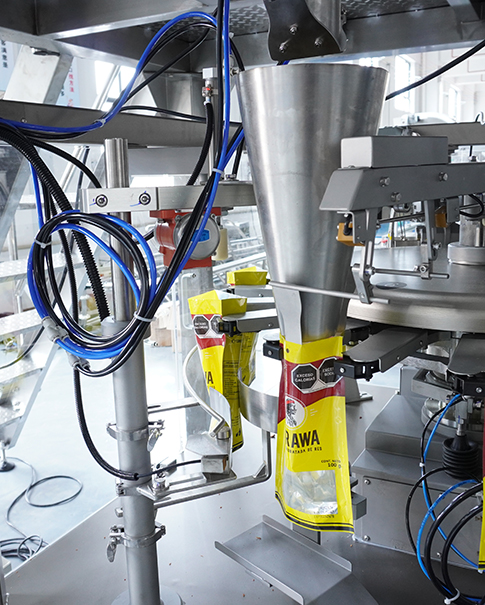

In today's highly competitive manufacturing environment, packaging efficiency plays a critical role in reducing production costs, meeting delivery deadlines, and maintaining product quality. As consumer demand continues to grow, manufacturers need packaging equipment that can produce more products in less time while ensuring consistent quality.
This is where the multi lane packing machine has become an ideal solution. By packaging multiple sachets simultaneously, it significantly increases production capacity without requiring additional floor space or labor. Whether packaging powders, granules, liquids, or pastes, a multi-lane system offers manufacturers a faster, smarter, and more cost-effective packaging solution.
In this article, we'll explain how multi lane packing machines improve production efficiency and why they have become an essential investment for modern packaging operations.
What Is a Multi Lane Packing Machine?
A multi-lane packing machine is an advanced vertical form fill seal (VFFS) packaging system designed to produce multiple stick packs or sachets simultaneously from a single roll of packaging film.
Unlike traditional single-lane machines that create one bag per cycle, a multi-lane machine divides the packaging film into multiple lanes, allowing several bags to be formed, filled, sealed, and cut at the same time. Depending on production requirements, the machine can be configured with 2, 4, 6, 8, 10, 12, or even more lanes.
Typical Packaging Process
The production process is fully automated and includes:
• Film feeding and alignment
• Bag forming
• Product measuring and filling
• Heat sealing
• Cutting and separation
• Finished product discharge
This continuous workflow ensures stable production with minimal manual intervention.
Suitable Products
Multi lane packaging machines are widely used for packaging:
* Powder (coffee, milk powder, protein powder, seasoning, pharmaceutical powders)
* Granules (sugar, salt, seeds, desiccants)
* Liquids (honey, ketchup, shampoo, sauces)
* Pastes (cream, jam, mayonnaise)
* Health supplements
Industries Served
These machines are commonly used in:
• Food and beverage
• Pharmaceutical
• Nutraceutical
• Cosmetic
• Personal care
• Chemical industries
Why Production Efficiency Matters
Manufacturers today face several challenges:
• Rising labor costs
• Increasing market demand
• Shorter delivery times
• Higher quality expectations
• Greater pressure to reduce production costs
Improving packaging efficiency is one of the most effective ways to remain competitive. A well-designed automatic packaging system not only increases output but also minimizes waste, improves consistency, and lowers long-term operating costs.
8 Ways Multi Lane Packing Machines Improve Production Efficiency
1. Produce Multiple Sachets Simultaneously
The biggest advantage of a multilane packing machine is its ability to package multiple bags in one production cycle.
For example:
• 4 lane packing machine = 4 sachets each cycle
• 6 lane packing machine = 6 sachets each cycle
• 8 lane packing machine = 8 sachets each cycle
Compared with a single lane machine, production capacity can increase several times while occupying nearly the same installation area.
This dramatically improves output without requiring additional operators.
2. Increase Packaging Speed
Modern multilane packaging machines utilize servo-driven control systems to maintain high speed and stable operation.
Benefits include:
• Faster bag production
• Stable machine performance
• Continuous operation
• Reduced production bottlenecks
For manufacturers producing millions of sachets annually, even a small increase in packaging speed can significantly improve overall productivity.
3. Fully Automated Packaging Process
Automation is one of the main reasons why manufacturers invest in multi lane equipment.
The machine automatically performs:
• Bag forming
• Product filling
• Sealing
• Cutting
• Batch coding (optional)
• Counting (optional)
Because the entire packaging process is automated, labor requirements are greatly reduced while production becomes more consistent and predictable.
4. Accurate Filling Reduces Product Waste
Material loss directly impacts production costs.
Multi lane packaging machines can be equipped with different dosing systems depending on the product type:
• Auger fillers for powders
• Volumetric cup fillers for granules
• Piston pumps for viscous liquids
• Rotary pumps or magnetic pumps for free-flowing liquids
Accurate filling ensures:
• Consistent package weight
• Less product giveaway
• Reduced waste
• Higher customer satisfaction
5. Reliable Sealing Reduces Reject Rates
Poor sealing leads to leakage, contamination, and product rejection.
High quality multi lane packing machines feature:
• Independent PID temperature control
• Stable sealing pressure
• Uniform seal quality
• Precise sealing time control
Reliable seals improve product appearance while minimizing defective packages and costly rework.
6. Quick Product Changeover
Many manufacturers package multiple products or different package sizes throughout the day.
Modern machines simplify changeovers through:
• PLC touchscreen control
• Recipe storage
• Adjustable bag length
• Easy parameter modification
Operators can switch production settings quickly, reducing downtime and maximizing machine utilization.
7. Continuous Operation with Minimal Downtime
Reliable equipment is essential for maintaining high production efficiency.
High quality multi-lane packaging machines incorporate:
• Automatic film tracking
• Film tension control
• Intelligent alarm systems
• Fault diagnosis functions
• Durable stainless steel construction
These features reduce unexpected stoppages and ensure long periods of stable operation.
8. Easy Integration into Automated Packaging Lines
A multi lane machine can become the core of a fully automated packaging line.
It can easily connect with:
• Screw feeders
• Bucket elevators
• Checkweighers
• Metal detectors
• Cartoning machines
• Case packers
• Robotic palletizers
An integrated production line reduces manual handling, increases throughput, and improves overall factory efficiency.
How to Choose the Right Multi Lane Packing Machine
Selecting the right machine depends on several important factors:
Product Characteristics
Determine whether the product is powder, granule, liquid, or paste, as each requires a different filling system.
Required Production Capacity
Higher production demands generally require more packaging lanes.
Package Size
Consider the width, length, and filling weight of each sachet.
Packaging Material
Ensure the machine is compatible with the intended packaging film.
Future Business Growth
Choose equipment that can support increased production requirements over time.
Working with an experienced manufacturer helps ensure the machine configuration matches your current and future production needs.
Frequently Asked Questions
1. Can one machine package different products?
Not all products. A multi lane packing machine is designed for a specific product category, such as powder, granules, liquids, or pastes. Machines for different product types use different filling systems and cannot be used interchangeably. However, products within the same category—for example, coffee powder, milk powder, or protein powder—can typically be packaged on the same machine after adjusting the filling parameters to suit the product characteristics.
2. How many lanes should I choose?
The ideal number of lanes depends on your desired production capacity, available factory space, and investment budget.
3. Are multi lane machines suitable for small businesses?
Yes. Machines with fewer lanes are an excellent option for small and medium size manufacturers looking to improve efficiency while controlling costs.
4. How accurate is the filling system?
High quality filling systems deliver excellent filling accuracy, helping reduce product waste and maintain consistent package weights.
5. Can the machine be integrated into a complete production line?
Absolutely. Multi lane packing machines can easily integrate with feeding, inspection, cartoning, case packing and palletizing equipment.
Why Choose Jason Machinery?
At Jason Machinery, we specialize in designing and manufacturing high-performance multi lane packaging equipment for customers worldwide.
Our advantages include:
• Extensive experience in packaging machinery manufacturing
• Customized machine configurations for different products
• Professional engineering and technical support
• High quality components for reliable operation
• Strict quality inspection before shipment
• Comprehensive after-sales service and technical assistance
Whether you need to package powder, granules, liquids or paste products, our experienced team can recommend a solution tailored to your production goals.
Conclusion
A multi lane packaging machine is one of the most effective ways to improve packaging productivity in today's competitive manufacturing industry. By producing multiple sachets simultaneously, automating the entire packaging process, improving filling accuracy, reducing labor requirements, and integrating seamlessly into automated production lines, these machines help manufacturers achieve higher efficiency while lowering operating costs.
As production demands continue to grow, investing in a reliable multi lane packaging solution is a smart decision that delivers long-term value through increased output, improved product quality, and enhanced profitability.
If you're looking for a customized multi-lane packaging machine for your products, Jason Machinery is ready to help. Contact our team today to discuss your packaging requirements, and we'll recommend the ideal solution to maximize your production efficiency.



WhatsApp : +86 13925973625
Email : info@fsjspm.com
Tel : +86-13266347573