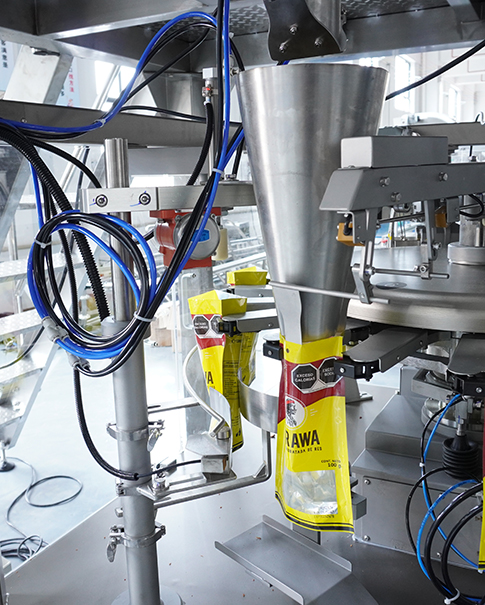

Concentrated coffee liquid is becoming increasingly popular in single serve coffee products, ready to use coffee solutions, foodservice applications and retail products. As production volumes increase, choosing the right packaging equipment becomes an important part of maintaining stable production, consistent filling accuracy, reliable sealing and efficient downstream packaging.
However, there is no single packaging machine that is suitable for every concentrated coffee liquid product. The right solution depends on the product characteristics, final package format, filling volume, production capacity, packaging material and required level of automation.
Concentrated coffee liquid can be packaged in cups, stick sachets, pre made pouches, special shaped sachets, bottles, and other formats. Some products may require only primary packaging, while others may need integrated cartoning, case packing, carton sealing, and palletizing. Therefore, the packaging line should be selected according to the complete production process rather than a single packaging machine.
Concentrated coffee liquid can be packed in single serve cups, stick sachets, bottles and other package formats. Each format requires a different primary packaging system and may require different cartoning, case packing, sealing and palletizing equipment.
This guide explains the key factors to consider when selecting a complete concentrated coffee liquid packaging line.
What Should You Consider Before Choosing a Coffee Liquid Packaging Line?
Before selecting equipment, manufacturers should first define the product and production requirements. A packaging line should be designed around the actual product and final package rather than choosing a machine based only on its filling speed.
The main factors include:
1. Product characteristics
2. Package format
3. Filling volume
4. Required production capacity
5. Packaging material
6. Filling accuracy
7. Level of automation
8. Factory layout
9. Secondary packaging requirements
10. Future production plans
These factors work together to determine the most suitable packaging line configuration.
Consider the Characteristics of the Concentrated Coffee Liquid
The physical characteristics of the coffee liquid are one of the first things to evaluate.
Different coffee concentrate formulas can have different viscosity and flow characteristics. Some products may flow easily while others may be thicker and require a suitable filling system to maintain stable dosing.
Before selecting a filling machine, it is important to confirm:
• Product viscosity
• Product flowability
• Filling temperature
• Filling volume
• Required filling accuracy
• Product sensitivity to air, light, or moisture
• Whether the product contains particles or other ingredients
The filling system should be selected according to the actual product characteristics. A filling system that works well for one coffee liquid may not be the best choice for another product.
Product testing before final equipment selection can help confirm filling performance and ensure that the machine is suitable for the specific coffee concentrate.
Choose the Packaging Line Based on the Final Package Format
The final package is one of the most important factors when selecting a packaging line.
Concentrated coffee liquid can be packaged in different formats depending on the target market, serving size, product positioning and distribution requirements.
Common packaging formats include:
• Single serve cups
• Stick sachets
• Premade pouches / Spout pouches
• Special shaped sachets
• Bottles
• Other customized packaging formats
Different package formats require different primary packaging technologies. The downstream process can also vary according to the package type, such as cartoning, case packing, carton sealing, and palletizing.
1. Single Serve Cup Packaging
A cup packaging line is suitable for portioned concentrated coffee liquid products that are intended to be used as individual servings.
A typical automatic line can include:
Cup Feeding → Liquid Filling → Film Sealing → Cartoning → Case Packing → Carton Sealing → Palletizing
A linear liquid cup filling and sealing machine can automatically complete liquid filling and film sealing. Features such as PLC control, touch screen operation, electric eye tracking, and automatic cup detection can help improve production stability.
For higher levels of automation, the cup filling and sealing machine can be connected with a cartoning machine, case packing system, carton sealing machine, and palletizing robot.
2. Stick Sachet Packaging
Stick sachets are another option for single serve concentrated coffee liquid.
There are different ways to package liquid products in stick sachets. For products that use roll film, a multi lane liquid packaging machine can form, fill, and seal multiple sachets in one continuous process. For products that use premade outer pouch, a doypack packaging machine can open the pouches, fill the stick sachets and seal the finished sachets.
A typical roll film stick sachet line can include:
Multilane Liquid Filling and Sachet Forming → Sachet Collection → Cartoning → Case Packing → Carton Sealing → Palletizing
A premade outer pouch packaging line can include:
Multilane Liquid Filling and Sachet Forming → Premade Pouch Opening → Sachet Filling → Sealing → Case Packing → Carton Sealing → Palletizing
Multi lane packaging can be considered when higher production capacity is required. The number of lanes should be selected according to the target output and package specifications.
3. Premade Sachet Packaging
Pre-made Sachet packaging can be used when the final package has already been manufactured before entering the filling process. This type of packaging can provide greater flexibility in pouch appearance, shape, printing and package design.
A typical premade sachet packaging line can include:
Premade Pouch Feeding → Pouch Opening → Liquid Filling → Sealing → Product Inspection → Cartoning → Case Packing → Carton Sealing → Palletizing
Or
Spout Pouch Feeding → Liquid Filling → Capping → Case Packing → Carton Sealing → Palletizing
The suitable configuration depends on the pouch size, pouch material, filling volume, sealing requirements, and production capacity.
For premade pouches, a dedicated doypack pouch packaging machine can be used. This solution is different from a roll film multi lane packaging machine because the pouch has already been formed before filling.
4. Special Shaped Sachet Packaging
Special shaped sachets can be used when brands want a distinctive package appearance or a specific package structure for concentrated coffee liquid.
A typical production process can include:
Special Shaped Stick Sachet Forming → Liquid Filling → Sealing → Inspection → Cartoning → Case Packing → Carton Sealing → Palletizing
Special shaped pouch packaging requires equipment designed for the specific pouch structure. The machine configuration should be determined according to the pouch shape, dimensions, opening position, filling volume and sealing requirements.
A Irregular shaped pouch packaging machine is generally designed for a specific pouch format. It should not be assumed that changing a mold will allow the machine to produce different pouch shapes.
5. Bottle Packaging
Bottle packaging is suitable for concentrated coffee liquid products that require a larger serving size or a resealable package.
A typical bottle packaging line can include:
Bottle Unscrambling → Liquid Filling → Capping → Labeling → Cartoning → Case Packing → Carton Sealing → Palletizing
The bottle filling system should be selected according to the product characteristics and required filling volume.
Bottle size, bottle shape, cap type, labeling requirements and production speed should also be confirmed before designing the complete line.
Compared with sachets and cups, bottles may be more suitable when the product requires resealing, a larger package volume or a different retail presentation.
Which Packaging Format Is Right for Concentrated Coffee Liquid?
The right packaging format depends on the product positioning, target market, serving size, production capacity, and desired package appearance.
| Packaging Format | Typical Application | Primary Packaging Solution | Suitable Downstream Equipment |
| Cup | Single serve coffee liquid | Cup filling and sealing machine | Cartoning, case packing, palletizing |
| Roll film stick sachet | Single dose products | Multi lane stick sachet packing machine | Cartoning, case packing, palletizing |
| Special shaped sachet | Customized package designs | Special shaped pouch packaging machine | Cartoning, case packing, palletizing |
| Premade sachet | Single dose products | Doypack packaging machine,spout Pouch Filling Capping Machine | Case packing, palletizing |
| Bottle | Retail and foodservice products | Bottle filling and capping line | Labeling, case packing, palletizing |
The best packaging format should be determined by the complete product and production requirements rather than by packaging appearance alone.
Match Production Capacity Across the Entire Packaging Line
Production capacity is not determined by the filling machine alone.
A complete packaging line may include several machines that operate together. If one machine has a lower processing capacity than the others, it can become a bottleneck and affect the output of the entire line.
For example, a liquid filling machine may be capable of producing a high number of packages per hour. If the cartoning machine cannot process the same amount of product, the actual line output will be limited by the cartoning process.
The same principle applies to case packing, carton sealing and palletizing.
When planning the production capacity, consider:
• Filling speed
• Number of packaging lanes
• Package size
• Cartoning speed
• Case packing speed
• Carton sealing speed
• Palletizing capacity
• Conveyor transfer speed
The goal should be to create a balanced packaging system rather than simply selecting the fastest individual machine.
Select the Right Level of Automation
Not every coffee manufacturer requires the same level of automation.
A small producer may only need an automatic filling and sealing machine. A larger manufacturer may need a complete packaging line that handles the product from primary packaging through palletizing.
Primary Packaging Automation
This configuration may include: Filling → Sealing
It is suitable when secondary packaging is completed manually or through existing equipment.
Secondary Packaging Automation
This can extend the process to: Filling → Sealing → Cartoning
The products are automatically placed into retail boxes after primary packaging.
Complete Packaging Automation
For high volume production, a complete line can include:
Filling → Sealing → Cartoning → Case Packing → Carton Sealing → Palletizing
This configuration can reduce manual handling and provide a continuous packaging process from individual packages to finished pallets.
The right automation level depends on production volume, available labor, investment budget, factory layout and future expansion plans.
Consider the Packaging Material
Packaging material also affects machine selection.
For cup packaging, the cup material and sealing film need to be compatible with the sealing system.
For stick sachets, the packaging film should be selected according to the required sealing performance and product protection requirements.
For bottles, the bottle material and cap system need to match the filling and capping equipment.
Common considerations include:
• Sealing performance
• Product protection
• Material thickness
• Film or container structure
• Package strength
• Storage requirements
• Transportation conditions
The final packaging material should be confirmed before the packaging line is finalized.
Select a Suitable Liquid Filling System
The filling system is a key part of any concentrated coffee liquid packaging line.
Different filling technologies can be used depending on the product characteristics and filling requirements.
For example, piston filling can be considered when the product has certain viscosity characteristics and accurate dosing is required. Pump based filling systems can also be selected according to product flowability and the specific packaging application.
The filling system should be evaluated based on:
• Product viscosity
• Product flowability
• Filling volume
• Required accuracy
• Production speed
• Package format
• Cleaning requirements
There is no universal filling system that is ideal for every concentrated coffee liquid. Testing the actual product is an important step when selecting the filling technology.
Pay Attention to Machine Hygiene and Construction
Concentrated coffee liquid is a food product, so machine construction and hygiene should be considered during equipment selection.
Stainless steel construction is commonly used in food packaging equipment because it provides good corrosion resistance and is suitable for regular cleaning.
For example, a liquid cup filling and sealing machine can use 304 stainless steel for the machine structure and relevant parts.
Other factors to evaluate include:
• Ease of cleaning
• Accessibility of relevant components
• Material used for product contact areas
• Protection around moving components
• Electrical safety
• Machine maintenance requirements
The specific machine configuration should be selected according to the product, production environment and applicable food packaging requirements.
Do Not Overlook Secondary and End of Line Packaging
A common mistake when planning a packaging project is to focus only on the primary packaging machine. In an automated production environment, the downstream process is equally important. After filling and sealing, products may need to be placed into retail boxes or doypack poucher, shipping cartons and pallets.
A complete system may therefore include:
Doypack Packing Machine
The doypack packing machine can automatically complete pouch feeding, pouch opening, product filling and sealing. It is suitable for different pouch formats and can be integrated with downstream case packing, carton sealing and palletizing equipment.
Cartoning Machine
The cartoning machine (or called box packing machine) automatically opens boxes, loads products, folds the carton and completes the carton closing process. A rotary working table can help improve efficiency while reducing the required floor space.
Automatic Case Opener
The case opener prepares shipping cartons for the case packing process. Vertical carton storage allows cartons to be added during operation without stopping the machine. The carton size can be adjusted without replacing accessories, depending on the machine configuration.
Robotic Case Packer
A robotic case packing system uses a robotic arm to place packaged products into shipping cartons. It can be configured according to product dimensions, carton dimensions and the required packing pattern.
Carton Sealing Machine
After products are loaded into cartons, the cartons can be automatically sealed before palletizing.
Palletizing Robot
The palletizing robot places cartons onto pallets according to a preset pattern. Parameters can be adjusted through the touch screen and different product types can be configured according to the production requirements.
Integrating these processes can significantly reduce manual material handling between different production stages.
How to Design a Complete Coffee Liquid Packaging Line
A practical packaging line design can follow several steps. The packaging line should be designed according to the final package rather than starting with a specific machine.
Step 1: Confirm the Final Package
First determine whether the product will be packed in cups, roll film stick sachets, special shaped sachets, bottles or another package format.
Step 2: Confirm the Filling Volume
The target filling volume should be confirmed before selecting the filling system.
Step 3: Determine the Required Output
Define the required packages per minute or packages per hour.
Step 4: Test the Product
The actual concentrated coffee liquid should be tested to determine its viscosity, flowability, and filling characteristics.
Step 5: Select the Primary Packaging Machine
Choose the appropriate cup filling machine, multi lane sachet packaging machine, doypack pouch packaging machine, special shaped pouch packaging machine or bottle filling line according to the package format.
Step 6: Design the Secondary Packaging
Determine whether the product needs cartoning, doypack pouch packaging , bundling, case packing or other secondary packaging.
Step 7: Add End of Line Automation
For fully automatic production, consider carton sealing and palletizing after case packing.
Step 8: Check the Factory Layout
The final line should fit the available production space and provide a practical material flow.
Machine access, operator positions, material loading areas, conveyor direction and finished product storage should all be considered.
Typical Concentrated Coffee Liquid Packaging Solutions
Solution 1: Cup Packaging Line
Cup Feeding → Liquid Filling → Film Sealing → Cartoning → Case Packing → Carton Sealing → Palletizing
Suitable for single serve concentrated coffee liquid products.
Solution 2: Multi Lane Stick Sachet Packaging Line
Liquid Filling and Sachet Forming → Sachet Collection → Cartoning → Case Packing → Carton Sealing → Palletizing
Or
Liquid Filling and Sachet Forming → Sachet Collection → Premade Pouch Packaging → Case Packing → Carton Sealing → Palletizing
Suitable for high volume single dose products packed with roll film.
Solution 3: Pre Made Sachet Packaging Line
Pre Made Sachet Feeding → Pouch Opening → Liquid Filling → Sealing → Cartoning → Case Packing → Carton Sealing → Palletizing
Or
Spout Sachet Feeding → Liquid Filling → Capping → Case Packing → Carton Sealing → Palletizing
Suitable for products using pre formed stick sachets.
Solution 4: Special Shaped Sachet Packaging Line
Pre Made Special Shaped Pouch Feeding → Pouch Opening → Liquid Filling → Sealing → Cartoning → Case Packing → Carton Sealing → Palletizing
Suitable for customized sachet designs and special pouch structures.
Solution 5: Bottle Packaging Line
Bottle Unscrambling → Liquid Filling → Capping → Labeling → Cartoning → Case Packing → Carton Sealing → Palletizing
Suitable for retail and foodservice products that require bottles or resealable containers.
The actual configuration can be customized according to the product characteristics, package specifications, production capacity and factory layout.
Common Mistakes When Choosing a Coffee Liquid Packaging Line
Choosing Equipment Only According to Filling Speed
A high filling speed does not automatically mean high overall production capacity. Downstream machines must be able to match the primary packaging speed.
Ignoring the Final Package Format
Cup, stick sachet and bottle packaging require different equipment configurations. The final package should be confirmed before selecting the main packaging machine.
Focusing Only on the Primary Packaging Process
Cartoning, case packing, carton sealing and palletizing can have a major impact on labor requirements and overall production efficiency.
Not Considering Future Production Growth
If production is expected to increase, the packaging line should leave room for future capacity expansion where practical.
Selecting Equipment Without Product Testing
Concentrated coffee liquids can have different viscosity and flow characteristics. Testing the actual product can help confirm whether the selected filling system is suitable.
Frequently Asked Questions
1. What is the best packaging format for concentrated coffee liquid?
There is no single best format for every product. Cups, stick sachets and bottles can all be suitable depending on the serving size, target market, product positioning and distribution requirements.
2. Can concentrated coffee liquid be packed in stick sachets?
Yes. Concentrated coffee liquid can be packed in stick sachets using a suitable liquid sachet packaging machine. A multi lane configuration can be considered when higher production capacity is required.
3. Which is better for coffee concentrate, cups or bottles?
The choice depends on the intended application. Cups can be suitable for single serve products, while bottles can be more suitable when a resealable container or larger package size is required.
4. How do I choose the right filling machine for coffee concentrate?
Start with the product viscosity, flowability, filling volume, required accuracy, package format and production speed. Product testing can then help determine the most suitable filling system.
5. Can filling, cartoning, case packing and palletizing be integrated into one line?
Yes. These machines can be connected through conveyors and control systems to create a complete automated packaging line. The exact configuration depends on the product format and required production capacity.
6. How important is production capacity when choosing a packaging line?
Production capacity is critical. The capacity of the complete line should be balanced across filling, cartoning, case packing, carton sealing and palletizing to avoid bottlenecks.
7. Can the packaging line be customized?
Yes. Packaging lines can be configured according to product characteristics, package format, filling volume, required production capacity, factory layout and automation requirements.
8. Can concentrated coffee liquid be packaged in premade sachets?
Yes. Pre made sachet packaging machines can automatically complete pouch feeding, opening, liquid filling, and sealing. The machine should be selected according to the pouch dimensions, shape, filling volume, and sealing requirements.
9. Can one machine package different sachet shapes?
Not necessarily. Different pouch structures and shapes may require dedicated machine configurations. A special shaped pouch packaging machine is generally designed according to the specific pouch format, so changing a mold does not necessarily allow the machine to produce different pouch shapes.
Conclusion
Choosing the right packaging line for concentrated coffee liquid requires more than selecting a filling machine. The complete solution should be planned around the product characteristics, final package format, filling volume, production capacity, packaging material, automation level, and factory layout.
Jason Machinery provides complete packaging solutions for concentrated coffee liquid in different package formats, including cups, roll film stick sachets, pre made stick sachets, special shaped sachets, and bottles. Depending on the product and production requirements, the packaging process can integrate filling and sealing, cartoning, case packing, carton sealing, and palletizing equipment.
Whether a manufacturer needs a cup filling line, a multi lane stick sachet packaging line, a pre made pouch packaging line, a special shaped sachet packaging line, or a bottle filling line, the equipment configuration can be planned around the specific product, package specifications, production capacity, and factory layout.
With experience in packaging machinery and complete line integration, Jason Machinery can help manufacturers evaluate their product and packaging requirements and develop a suitable automated packaging solution from primary packaging to end of line automation.



WhatsApp : +86 13925973625
Email : info@fsjspm.com
Tel : +86-13266347573