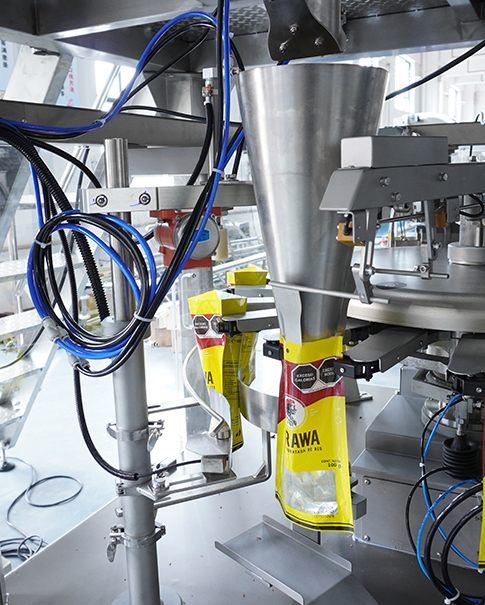

Multi lane packaging machines produce several packs in parallel within one machine. For suitable applications, they can increase output, improve the use of factory space and reduce labor input per finished pack. They can also support consistent portions and reduce avoidable waste when the filling system, packaging film and machine settings match the product.
These benefits do not come from lane count alone. A useful comparison considers sustained output, filling consistency, sealing performance and total operating costs. The best machine is the one that delivers the required number of acceptable packs under actual production conditions.
What Is a Multi Lane Packaging Machine?
A multi lane packaging machine uses several parallel channels to produce individual packs. Depending on its design, it combines film feeding, forming, filling, sealing and cutting within a coordinated process.
The term “lane” describes a packaging channel. It does not identify the filling method or bag style. Different configurations are required for powders, granules and liquids because their flow characteristics and dosing requirements differ.
A multi lane sachet packing machine may produce back seal, three side seal or four side seal sachets, depending on its construction. A machine designed for one format should not be assumed to support another format without suitable tooling and engineering confirmation.
Cycle speed also needs careful interpretation. Cycles per minute describe how often the machine completes its operating cycle. Packs per minute describe the number of finished packs produced across the active lanes. These figures are not interchangeable.
What Are the Main Benefits?
1. Increase Output Through Parallel Production
The clearest benefit is the ability to produce several packs during the same cycle. This provides an alternative to relying entirely on faster operation from a single packaging channel.
The basic relationship is:
Theoretical packs per minute = active lanes × cycles per minute × packs produced by each lane per cycle
For example, Jason Machine lists four lanes and a packing speed of 20 to 40 cycles per minute for its four lane powder sachet packing machine. If each lane produces one pack per cycle and all four lanes are operating, those published figures correspond to a theoretical output of 80 to 160 packs per minute.
This calculation is not a production guarantee. Actual output depends on the powder, target weight, sachet dimensions, film and operating conditions. It also needs to account for rejected packs and interruptions.
For purchasing decisions, ask for the number of acceptable packs produced over an agreed test period. Include replenishment, film changes and relevant stops in the agreed measurement method. This makes the result more useful than a brief demonstration at maximum speed.
2. Improve Output per Unit of Factory Space
A multi lane configuration can help a factory achieve its required output without installing as many separate packaging machines. Combining parallel channels within one machine may improve the relationship between production capacity and occupied floor space.
The comparison must cover the complete working area. Machine dimensions alone do not include product feeding, operator access, film replacement, maintenance clearance and downstream equipment.
Compare alternative layouts at the same required output. A multi lane packing machine may occupy more space than one single lane packing machine but less space than several machines needed to perform the same production task.
A useful measure is acceptable packs per hour divided by the total operating area. This connects space usage to usable production rather than treating a smaller machine footprint as an advantage by itself.
3. Reduce Labor Input per Finished Pack
Coordinated forming, filling, sealing and cutting can reduce repeated manual handling. When several packaging channels operate within the same automated process, a production team may spend less labor time on each finished pack.
The potential saving depends on the complete workflow. Operators may still need to replenish product, replace film, inspect samples, clean contact parts and handle finished goods.
For this reason, compare labor hours per thousand acceptable packs rather than counting only the person standing beside the machine. Include the people required for feeding, inspection and final packing in both alternatives.
Packaging automation delivers a clearer labor benefit when the surrounding operations can keep pace. If workers must manually collect and sort a rapidly increasing volume of sachets, part of the benefit may be lost downstream.
4. Support Consistent Filling and Package Quality
Multi lane equipment can combine controlled dosing with coordinated film movement and sealing. When these systems are selected and adjusted correctly, they support repeatable portions and package dimensions across a production run.
However, filling accuracy depends on the dosing system and product behavior rather than the number of lanes. Powder flow, changes in bulk density and target fill weight can affect dosing performance. Liquids and pastes require a filling system suited to their viscosity and flow characteristics.
The distinction is visible in the equipment configuration. The powder machine described above uses auger dosing. The multilane liquid packing machine uses a metering pump selected around product characteristics and filling requirements. These are different technical solutions, not interchangeable benefits of adding lanes.
Verification should cover every lane. Record individual weights and check variation within each lane as well as differences between lanes. A satisfactory combined average can hide an individual channel that regularly produces underweight or overweight packs.
Sealing needs separate evaluation. Correct filling weight does not prove that a pack is securely sealed. Check seal performance using the intended product and film under the proposed operating conditions.
5. Reduce Avoidable Product and Film Waste
A suitable setup can reduce losses caused by excessive filling, unstable film handling and rejected seals. The economic value comes from producing more acceptable packs from the material supplied to the process.
Product waste and film waste should be measured separately. Product losses may include spills, rejected contents and unnecessary overfilling. Film losses may include trimming, damaged material and packs rejected during adjustment.
Do not assess waste only during a stable section of the run. Include startup, film replacement, changeovers and recovery after interruptions where these activities form part of normal production.
More lanes do not automatically mean lower film consumption. Bag dimensions, film layout, trim requirements and rejection rates all matter. Compare the amount of film consumed per acceptable pack using the same fill quantity and packaging format.
Any claim of material savings should therefore come from a defined comparison rather than a general percentage attached to the machine category.
6. Produce Consistent Single Portions at Scale
Multi lane equipment can support the repeated production of individual portions for suitable food, beverage and personal care applications. The practical benefit is the ability to produce the required pack quantity while maintaining the agreed fill amount and package dimensions.
A multi lane stick pack machine is one option when the product and required presentation suit a stick format. Other applications may call for three side seal or four side seal sachets.
The right format depends on more than appearance. Product flow, target portion, opening method and downstream handling should be considered together. A pack that looks suitable must still fill reliably and remain properly sealed.
Packaging format also should not be confused with preservation performance. Adding lanes does not establish a longer shelf life. Product stability depends on the product, packaging barrier, seal quality and storage conditions, which require their own evaluation.
7. Plan Capacity Around Future Production Requirements
Multi lane equipment provides a way to select capacity around the expected production requirement rather than adding independent machines without considering the wider line.
Lane count should be reviewed together with pack width, film width, filling requirements and downstream capacity. The selected configuration must allow product supply and finished pack handling to keep pace with the packaging process.
For instance, the liquid sachet machine described earlier can be configured with downstream cartoning and case packing equipment. The final arrangement still depends on sachet dimensions, carton format, output requirements and factory layout.
Customization at the time of ordering is not the same as expansion after installation. Additional lanes may require a different frame, filling arrangement or sealing system. Confirm any future expansion capability in the engineering specification before treating it as an investment benefit.
How Do Multi Lane Machines Compare with Single Lane Machines?
Neither design is automatically the better investment. The comparison should reflect the actual production task and the number of machines required to complete it.
| Decision factor | Single lane configuration | Multi lane configuration |
| Required output | Check whether one machine is sufficient or several are needed | Check sustained output across all active lanes |
| Product mix | Evaluate scheduling flexibility for different products | Evaluate the effect of frequent changes on available production time |
| Factory space | Include the complete layout for every required machine | Include feeding equipment, service access and downstream handling |
| Labor | Count the people required across all machines and operations | Confirm actual labor needs around the centralized packaging process |
| Quality control | Verify the stability of each machine | Verify each lane and differences between lanes |
| Downtime | Consider whether other machines can continue during a stoppage | Confirm whether a shared system fault stops every lane |
| Investment value | Compare total cost at the required output | Compare total cost at the expected utilization level |
A requirement for modest output or frequent product changes can make a single lane arrangement worth considering. A requirement for larger volumes of a stable product and pack format can make multi lane production worth evaluating. Actual testing and scheduling requirements should determine the result.
When Might a Multi Lane Machine Be the Wrong Choice?
A machine with more capacity than the business can use may tie up capital without delivering a worthwhile operating benefit. Start with realistic production demand rather than choosing the highest available lane count.
Frequent changes between products or bag formats also deserve attention. Cleaning several dosing channels and restoring acceptable production may take longer than a short parameter adjustment suggests. Compare complete changeover times for the intended product mix.
Unresolved product behavior is another concern. If a powder does not feed consistently or a liquid creates problems during filling, adding lanes does not solve the underlying issue. Confirm the product and filling system first.
Finally, check the slowest part of the complete line. Faster sachet production has limited value if inspection, counting or cartoning cannot handle the resulting flow.
How Can Buyers Verify the Benefits Before Purchase?
Define the Test Conditions
A meaningful evaluation starts with the actual product and packaging requirements. Provide the supplier with:
• Product samples and relevant flow characteristics.
• Target fill weight or volume and the permitted tolerance.
• Bag dimensions and required seal format.
• Packaging film specifications and representative samples.
• Required acceptable output and normal shift pattern.
• Expected product changes and cleaning requirements.
• Factory layout and downstream packing requirements.
These details define what the machine needs to achieve. They also reduce the risk of comparing quotations based on different assumptions.
Evaluate Performance Through a Factory Acceptance Test
A factory acceptance test provides an opportunity to check the agreed machine configuration before shipment. The test should use representative product and film wherever practical, with acceptance conditions agreed in advance.
| Test item | Evidence to retain | What it helps establish |
| Sustained production | Test duration, total packs, acceptable packs and recorded stops | Usable output under the agreed conditions |
| Filling consistency | Samples identified by lane, weight results and measurement method | Whether every channel meets the agreed tolerance |
| Seal performance | Inspection results and appropriate seal or leak test records | Whether the package meets the agreed sealing requirements |
| Material consumption | Film input, product losses and rejected packs | Actual material usage per acceptable pack |
| Changeover and cleaning | Time from the final acceptable pack of one run to stable acceptable production in the next | The production time affected by a change |
| Line integration | Records of feeding, discharge and downstream operation | Whether the complete configuration works at the required rate |
Test duration, sample quantity and acceptance limits should suit the product and the agreed specification. A short video can show the machine operating, but it does not replace documented production and quality results.
Confirm Performance at the Installation Site
A site acceptance test checks operation under the buyer’s actual conditions after installation. Product supply, utilities, operators and downstream equipment may differ from the factory test setup.
Confirm responsibilities for commissioning, training, spare parts and service in writing. The delivered configuration and agreed support scope should match the purchase specification.
How Should You Evaluate Cost per Pack?
Purchase price is only one part of the comparison. A machine that appears less expensive can become less economical if its usable output is lower or its operating losses are higher.
Use a consistent cost boundary:
Cost per acceptable pack = included costs over the comparison period ÷ acceptable packs produced during that period
Depending on the purpose of the comparison, included costs may cover labor, film, product losses, energy, maintenance and allocated equipment costs. State whether the value of the packaged product is included so that different proposals use the same basis.
For production losses, the overall equipment effectiveness (OEE) calculation method explained by Vorne separates availability, performance and quality. This provides a useful framework for distinguishing time lost to stops, reduced operating speed and rejected output. It does not establish the performance of any particular machine without actual records.
Investment payback also requires realistic assumptions. Count savings and additional contribution that the business can reasonably achieve, then deduct the additional operating expenses. Do not assume that every extra pack of theoretical capacity will become a sale.
Frequently Asked Questions
1. How Many Lanes Do I Need?
Start with the number of acceptable packs required during the available production time. Then evaluate cycle speed, pack dimensions, product behavior and expected losses. The selected lane count must also match feeding and downstream capacity. A supplier should confirm the proposed configuration against these requirements.
2. Are Multi Lane Machines More Accurate Than Single Lane Machines?
Not necessarily. Accuracy depends on the filling method, product characteristics, machine settings and measurement process. Multi lane equipment requires verification of each channel. More lanes increase the number of parallel packaging channels but do not independently improve dosing accuracy.
3. Can One Machine Package Powders, Granules and Liquids?
Do not assume that one configuration handles all three. Different products can require different dosing systems, contact parts and cleaning arrangements. Confirm the actual products and any required conversion work with the supplier before including multiple applications in the purchase specification.
4. Do More Lanes Always Reduce Film Consumption?
No. Film consumption depends on bag dimensions, film layout, trimming and rejected packs. More lanes increase parallel production but do not automatically reduce the film needed for each pack. Compare measured film consumption per acceptable pack under equivalent packaging conditions.
5. Can More Lanes Be Added After Installation?
Only if the machine was engineered to support that change. Ordering a customized lane count does not prove that an installed machine can be expanded. Ask for written confirmation of the required mechanical changes, additional components and operating limitations before relying on this option.
6. What Maintenance Affects Production Consistency?
The relevant items depend on the machine but may include dosing components, film feeding mechanisms, sealing surfaces and cutting parts. Follow the applicable maintenance instructions and operating conditions. Check whether wear or buildup affects individual lanes differently instead of looking only at the combined output.
7. What Should I Send for a Useful Packaging Test?
Provide representative product and film samples together with the target fill amount, bag dimensions, required output and acceptance criteria. Explain any expected changes in product condition or production schedule. A test based on these details is more informative than a demonstration using an unrelated product.
Discuss Your Packaging Requirements with Jason Machine
The benefits of multi-lane packaging machine come from matching parallel production to the product and the complete packaging line. Higher output, better space utilization and lower labor input become valuable when the machine also maintains the required package quality and fits the production schedule.
Share your product, target fill amount, pack dimensions, film specification and required acceptable output with Jason Machine. These details provide the basis for discussing a suitable configuration and a product test plan.
Discuss your packaging requirements.



WhatsApp : +86 13925973625
Email : info@fsjspm.com
Tel : +86-13266347573