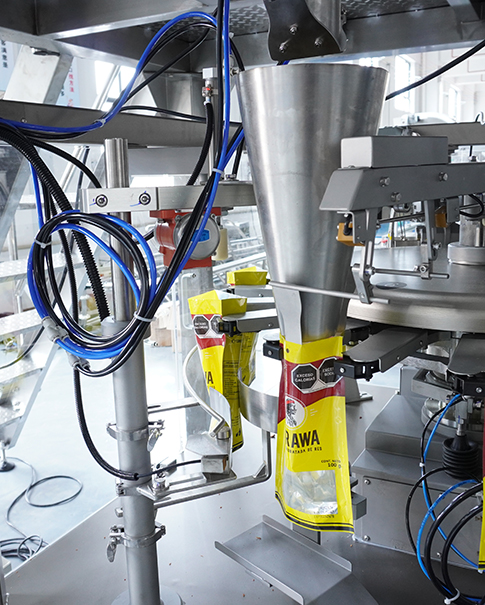

Packaging accuracy is one of the most important factors manufacturers consider when investing in multi-lane packing machines. Whether packaging coffee powder, protein powder, sugar, pharmaceutical granules, shampoo, honey or liquid supplements, every gram and every milliliter matters. Even small deviations in filling weight can lead to product waste, customer complaints, regulatory issues and increased production costs.
Modern vertical multilane packing machines are designed to deliver both high production speeds and excellent filling consistency. However, packaging accuracy depends on much more than the machine itself. The filling system, product characteristics, machine configuration, operator experience and maintenance practices all play an important role in achieving stable, repeatable results.
At Jason Machinery, we have extensive experience manufacturing customized vertical multi-lane packing machines for customers around the world. This guide explains how accurate a multi lane packing machine can be, what factors influence its performance, and how manufacturers can maximize filling precision while maintaining high production efficiency.
What Is Filling Accuracy in a Multi-Lane Packing Machine?
Filling accuracy refers to how closely the actual weight or volume inside each sachet matches the target value set by the operator. It is a key indicator of machine performance and packaging quality.
It is also important to distinguish filling accuracy from filling consistency.
•Filling accuracy measures whether each package reaches the desired weight or volume.
•Filling consistency measures whether every lane produces nearly identical packages throughout continuous production.
A machine may achieve excellent average accuracy while still showing noticeable differences between individual lanes if calibration is not properly maintained.
For industries such as food, pharmaceuticals, cosmetics and nutraceuticals, maintaining both accuracy and consistency is essential for meeting quality standards and protecting brand reputation.
How Accurate Is a Typical Multi-Lane Packing Machine?
The filling accuracy of a multi-lane packing machine varies depending on the product being packaged, the filling technology used, production speed and environmental conditions.
The following values represent typical performance under normal operating conditions.
| Product Type | Typical Filling Accuracy |
| Fine Powder | ±1% to ±2% |
| Granules | ±0.5% to ±1% |
| Free-Flowing Liquids | ±0.5% to ±1% |
| Pastes & Viscous Products | Around ±1% |
These values are intended as general references. Actual filling accuracy depends on factors such as product density, flowability, package size, machine configuration and operator settings.
A properly configured machine with routine calibration and stable raw materials will generally produce significantly more consistent results than a poorly maintained system.
What Factors Affect Filling Accuracy?
Many buyers assume that filling accuracy depends only on the machine. In reality, several factors work together to determine the final packaging precision.
1. Filling System Selection
The filling system is the most critical factor influencing accuracy. Different products require different measuring technologies.
Auger Filling System
An auger filler is ideal for powders such as:
• Coffee powder
• Milk powder
• Protein powder
• Supplement powder
• Spice powder
The rotating auger precisely controls the amount of powder delivered into each sachet, making it an excellent choice for fine and non-free-flowing materials.
Volumetric Cup Filling System
Cup fillers are commonly used for free-flowing granules such as:
• Sugar
• Salt
• Herbal granule
• Seeds
• Desiccants
They provide fast filling speeds and reliable performance for products with uniform particle size.
Piston Pump Filling System
Piston pumps are suitable for medium to high viscosity products including:
• Honey
• Sauce
• Ketchup
• Cream
• Cosmetic paste
Their precise volume control makes them an excellent option for products requiring high filling accuracy.
Magnetic Pump Filling System
Magnetic pumps are designed for low viscosity liquids such as:
• Drinking water
• Juice
• Energy gel
• Beverage concentrates
• Soy sauce
• Vinegar
• Essential oils
These systems offer stable repeatability and smooth filling performance. Selecting the appropriate filling system is the first step toward achieving high packaging accuracy.
2. Product Characteristics
The physical properties of the product significantly affect filling precision. Important characteristics include:
• Particle size
• Bulk density
• Moisture content
• Flowability
• Viscosity
• Temperature
For example, powder with high moisture content may bridge inside the hopper, causing inconsistent filling. Likewise, liquids with varying viscosity may require different pump to maintain stable dosing.
Testing the product before machine configuration helps determine the most suitable filling solution.
3. Servo Motor Control
Modern multi row packing machines increasingly use servo driven technology instead of traditional mechanical transmission systems. Servo motors improve accuracy by providing:
• Precise film pulling
• Stable bag length control
• Accurate synchronization
• Reduced mechanical wear
• Better repeatability during long production runs
Stable film movement also contributes to consistent package dimensions, ensuring each filling cycle begins at the correct position.
4. PLC Intelligent Control System
An advanced PLC control system enhances packaging precision by minimizing manual adjustments. Key advantages include:
• Automatic parameter storage
• Recipe management
• Real-time production monitoring
• Quick product changeover
• Reduced operator errors
Operators can save settings for different products and quickly switch production without repeating complex adjustments.
5. Machine Manufacturing Quality
High filling accuracy begins with precision engineering. Machine performance depends on:
• High quality machining
• Rigid frame construction
• Accurate assembly
• Premium electrical components
• Stable transmission systems
Machines built with tight manufacturing tolerances generally maintain higher accuracy over extended production periods.
6. Packaging Film Quality
Although often overlooked, packaging film also affects filling consistency. Poor quality film may cause:
• Film stretching
• Registration errors
• Bag length variation
• Unstable sealing position
Using high quality laminated films with consistent thickness helps maintain stable machine operation.
7. Operator Experience
Even the best packaging machine requires proper operation. Experienced operators know how to:
• Adjust machine parameters correctly
• Perform regular calibration
• Monitor filling weight
• Inspect machine components
• Respond quickly to abnormal conditions
Regular operator training helps maintain consistent production quality.
Comparing Different Filling Systems
Choosing the correct filling technology is essential for achieving high precision.
| Filling System | Suitable Products | Accuracy Level | Main Advantages |
| Auger Filler | Powder | High | Excellent for fine powders |
| Measuring Cup Filler | Granules | Medium to High | Fast, economical, simple |
| Piston Pump | Paste & Viscous Liquid | Very High | Precise volumetric control |
| Magnetic Pump | Free-Flowing Liquid | High | Stable continuous filling |
Matching the filling system to the product characteristics improves both production efficiency and filling consistency.
How to Improve Filling Accuracy
Manufacturers can significantly improve packaging precision by following several best practices.
Choose the Correct Filling System
Different products require different measuring methods. Avoid using one filling system for materials outside its intended application.
Perform Regular Calibration
Routine calibration ensures that every lane delivers the correct amount of product. Calibration should be performed:
• Before production begins
• After changing products
• After replacing machine parts
• During scheduled maintenance
Maintain Stable Material Feeding
Unstable product feeding often causes weight fluctuations. Use properly designed hoppers and feeding devices to ensure continuous material flow.
Use High Quality Packaging Film
Consistent film quality improves bag formation, sealing and filling synchronization.
Schedule Preventive Maintenance
Routine inspections help detect wear before it affects filling accuracy. Maintenance should include:
• Servo system inspection
• Filling system cleaning
• Sensor calibration
• Seal jaw inspection
• Blade replacement when necessary
Preventive maintenance reduces downtime while maintaining long-term precision.
Common Filling Accuracy Problems and Solutions
The table below summarizes common accuracy issues and practical solutions.
| Problem | Possible Cause | Recommended Solution |
| Underfilled sachets | Incorrect calibration | Recalibrate filling system |
| Overfilled sachets | Wrong filling parameters | Adjust target weight |
| Weight differences between lanes | Filling imbalance | Calibrate each lane individually |
| Inconsistent package weight | Product flow instability | Improve material feeding |
| Poor repeatability | Servo or sensor issue | Inspect servo system and sensors |
Most filling issues can be corrected quickly through systematic inspection and routine maintenance.
Frequently Asked Questions
1.How accurate is a multi-lane powder packing machine?
Most powder packaging applications achieve approximately ±1% to ±2% filling accuracy under proper operating conditions. Actual performance depends on the powder's density, flowability and the filling system used.
2.Does production speed affect filling accuracy?
Yes. Increasing machine speed may slightly reduce filling consistency if machine settings are not properly optimized. A well-designed servo-controlled machine minimizes this effect while maintaining high output.
3.Which filling system offers the highest accuracy?
There is no universal answer. The most accurate system depends on the product being packaged. Auger fillers perform best for powders, piston pumps excel with viscous products, and magnetic pumps provide excellent precision for free-flowing liquids.
4.Can one multi-lane packing machine package different products?
Yes. By replacing the appropriate filling system and adjusting machine parameters, a multi-lane packing machine can package different products within the same product category. For example, one auger filling machine can package various powders, while one piston pump machine can handle different viscous liquids. Switching between fundamentally different product types typically requires changing the filling system to ensure optimal accuracy and performance.
5.How often should filling systems be calibrated?
Calibration frequency depends on production volume and quality requirements. Daily verification and periodic recalibration are recommended for consistent results.
6.What causes filling weight fluctuations?
Weight variation is commonly caused by unstable material flow, incorrect parameter settings, worn filling components, inconsistent product characteristics or insufficient maintenance.
7.How can I improve lane-to-lane consistency?
Regular calibration of each lane, proper machine maintenance, stable product feeding and high quality components all contribute to improved consistency across multiple lanes.
How Jason Machinery Ensures High Filling Accuracy
At Jason Machinery, packaging accuracy is a key consideration throughout the design and manufacturing process.
Our vertical multi-lane packing machines incorporate advanced technologies to help customers achieve stable, repeatable filling performance across a wide range of products.
Key features include:
• Servo driven film pulling system for precise bag positioning
• Intelligent PLC control with user-friendly touch screen operation
• High quality international electrical components for reliable performance
• Customized filling systems for powders, granules, liquids and pastes
• Precision manufacturing and rigorous quality inspection
• Machine testing and commissioning before shipment
• Technical support and customization based on customer production requirements
By combining precision engineering with practical application experience, we help manufacturers reduce product waste, improve packaging consistency and maximize production efficiency.
Conclusion
A multi lane packing machine is capable of delivering excellent filling accuracy when it is properly configured, correctly matched to the product and maintained according to a preventive maintenance schedule.
Factors such as filling system selection, product characteristics, servo motor control, PLC automation, machine manufacturing quality and operator experience all influence the final packaging precision. Understanding these factors allows manufacturers to reduce waste, improve product quality and achieve more consistent production.
If you are looking for a high precision vertical multi line packing machine for powders, granules, liquids or pastes, Jason Machinery offers customized packaging solutions designed to combine speed, accuracy and long-term reliability. Contact our team today to discuss your application and discover the right solution for your production line.



WhatsApp : +86 13925973625
Email : info@fsjspm.com
Tel : +86-13266347573