What Is the Difference Between Powder, Liquid and Granule Packing Machines?
Oct 16, 2026
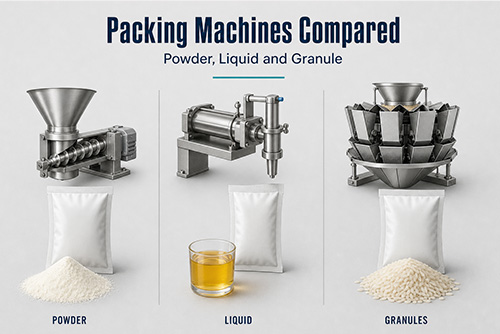
Powder, liquid and granule packing machines differ mainly in how they measure and deliver the product into a package. Powder packing machines commonly use auger dosing, liquid packing machines use a suitable pump or piston filling system, and granule packing machines commonly use volumetric cups or weighing systems. The right choice depends on how the product behaves, not just what it is called.
These machines may share a similar bag making and sealing platform. However, their feeding equipment, filling components and cleaning requirements can be very different. Choosing the correct combination helps you address inconsistent fill quantities, product loss and contamination around the seal.
This guide focuses on machines that pack products into bags, sachets and pouches. It explains the main differences and the information you need before choosing a configuration.
How Do the Three Types Compare?
The table below summarizes common configurations and the questions worth checking during a product trial. These are selection guidelines, not specifications that apply to every machine.
Comparison
Powder packing machines
Liquid packing machines
Granule packing machines
Typical products
Flour, milk powder, ground spices and coffee powder
Oil, honey, sauces and shampoo
Sugar, rice, seeds, beans and nuts
Common dosing method
Auger dosing
Metering pump or piston filling
Volumetric cups or weighing
Product information to provide
Flow behavior, bulk density, tendency to form lumps and dust
Viscosity, filling temperature, foaming behavior and any solid particles
Particle size, shape, flow behavior and fragility
Filling concern to inspect
Uneven powder delivery and dust around the filling area
Dripping, splashing, stringing and incomplete discharge
Product damage, interrupted flow and material arriving late
Seal area check
Powder residue between the sealing surfaces
Liquid or paste on the area to be sealed
Particles trapped in the seal
Cleaning areas to inspect
Hopper, auger and discharge tube
Product tank, pipes, valves and nozzles
Measuring cups, weighing buckets and product chutes
The common dosing arrangements are also described in this overview of packaging systems by product type. Actual suitability still requires confirmation with your product and packaging material.
How Does a Powder Packing Machine Work?
A powder packing machine measures a dose of powder, delivers it into the package and coordinates the filling cycle with bag handling and sealing. Typical applications include flour, milk powder, cocoa powder and ground spices.
Understand the Role of the Auger
An auger filler uses a rotating screw to move powder through a discharge outlet. The machine controls the screw movement to deliver the required dose. The screw, outlet and operating settings must suit both the powder and the intended fill quantity.
Controlling screw rotation is not the same as directly weighing every package. When a supplier describes a machine as having weight control, ask whether it uses a preset dosing quantity, a separate weight check or feedback that adjusts subsequent fills.
This distinction makes a specification more useful. A statement about motor control alone does not explain the weight variation you can expect from your actual product.
Check How the Powder Behaves
Do not choose equipment from the product name alone. Provide a representative sample and describe whether the powder flows easily, forms lumps, settles during handling or produces airborne dust.
Bulk density describes how much a given volume of powder weighs, including the spaces between particles. Changes in how the powder settles are therefore relevant when assessing a dosing process that does not directly weigh each portion.
During a trial, watch the powder moving through the hopper and outlet. Request weight records from consecutive packages rather than relying only on a photograph of one filled bag.
Evaluate Dust Control and Cleaning
Inspect the filling area for escaping dust and check whether powder reaches the part of the bag that must be sealed. Ask which dust control measures are included and which require additional equipment.
Also inspect how the hopper and auger are opened, removed and cleaned. Access to these components matters when changing products. Technical guidance on auger filler selection discusses dust containment, powder settling and hopper access as relevant considerations.
You can explore the available applications in the powder packaging machine range.
How Does a Liquid Packing Machine Work?
A liquid packing machine delivers a measured quantity of liquid or paste through a filling system and into a package. Depending on the application, that system may use a metering pump or a piston mechanism.
Its suitability depends on the product passing through the entire filling path, including the tank, valves, pipes and nozzle.
Match the Filling System to the Product
A piston filler meters product using the movement of a piston within a cylinder. It is one option for liquid and paste applications, including certain sauces and viscous products. It is not a universal solution for every liquid.
Describe the product at its intended filling temperature. Include its viscosity, whether it contains solid pieces and whether it tends to foam or form strings when dispensing stops.
Honey, oil and sauce may all appear in a liquid machine catalog, but that does not mean they can use the same settings and components without adjustment. A sauce containing pieces also needs a filling path that can handle those pieces.
Look Beyond the Fill Quantity
The nozzle must stop dispensing cleanly enough for the packaging cycle. During testing, inspect for droplets, splashes and product strands after the main dose has finished.
These observations help determine whether nozzle changes or other filling controls are needed. Published piston filling equipment specifications illustrate options for controlling dripping and foaming. Such options belong to the specified equipment and should not be assumed to be standard on another machine.
Confirm the Cleaning Procedure
Ask to see how product is removed from the tank, pipes, valves and nozzle. Establish which parts require disassembly and how the cleaning result will be checked.
A stainless steel construction does not, by itself, demonstrate that a complete filling process meets your hygiene requirements. Materials, component design, cleaning procedures and the intended product all need consideration.
The liquid packaging machine range provides examples of pouch and sachet applications for liquids and pastes.
How Does a Granule Packing Machine Work?
A granule packing machine portions solid products such as sugar, rice, seeds and nuts before transferring them into a package. Two common approaches are volumetric measurement and weighing.
The important question is not which approach sounds more advanced. It is which arrangement can meet your fill requirements while handling the product appropriately.
When Should You Consider Volumetric Cups?
A volumetric cup measures a portion by its volume. This approach is commonly used for suitable granules that flow freely.
Because the cup measures volume rather than directly measuring mass, verify the resulting package weights with your product. If weight is your acceptance criterion, the trial needs to demonstrate that the chosen cup and settings can meet it.
Include normal variations between product batches in the discussion. A successful demonstration with a different material does not establish the result for yours.
When Should You Consider a Weigher?
A multihead weigher uses multiple weighing heads to prepare a portion close to the target weight. It is commonly considered for granular products and larger or irregular pieces.
Ask the supplier to explain how the proposed weighing arrangement suits the product, target quantity and required output. More complex equipment is not automatically the best choice for every application.
A useful comparison should show the measured fill results, the condition of the product and the number of acceptable packages produced under the agreed conditions.
Check Product Integrity and Discharge
For products such as nuts, inspect the contents after packaging as well as the package weight. Watch how material travels through the feeding system and falls into the bag.
Also check whether all material has cleared the sealing area before the seal closes. Product caught in the seal is a different issue from an incorrect portion weight, so both deserve separate inspection.
The granule packaging machine range includes applications for products such as rice, seeds, sugar and nuts.
Can One Machine Pack Powder, Liquid and Granules?
Sometimes a packaging platform can accept different filling systems, but this capability must be confirmed for the specific machine. Similar appearance does not establish compatibility.
It helps to separate two decisions.
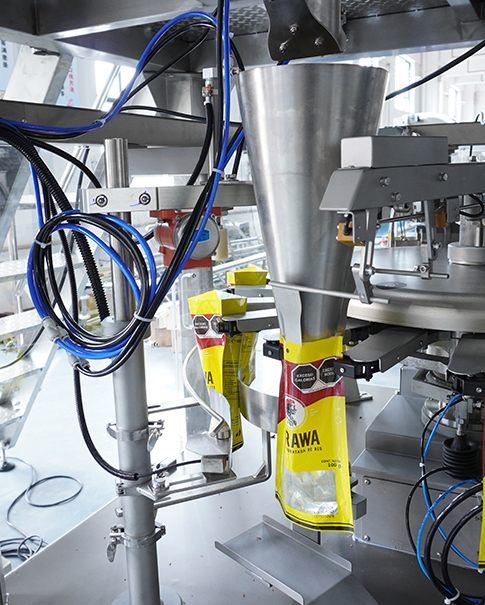
First, choose how the package will be handled. A vertical form fill seal machine makes bags from roll film, fills them and seals them. A machine for premade pouches handles bags that have already been manufactured.
Second, choose how the product will be measured and delivered. That may require an auger, a liquid filling system, volumetric cups or weighing equipment.
Before planning to switch between products, ask what must change:
1. The dosing and feeding equipment.
2. The components that contact the product.
3. The filling outlet or nozzle.
4. The operating settings and timing.
5. The cleaning process and inspection requirements.
A machine that packages both powder and granules may still require a different filling configuration. Switching from a dry product to a liquid requires its own engineering assessment. Do not assume that selecting another recipe on the control screen is enough.
How Should You Choose the Right Configuration?
Start with a written description of the product and the finished package. This gives suppliers a common basis for their recommendations and makes quotations easier to compare.
Describe the Product and Supply a Sample
Provide the product composition and a representative sample. Explain any changes that occur during storage, transport or production.
For powder, include information about flow and settling. For liquids, include the filling temperature and any solid particles. For granules, explain whether preserving the product shape is important.
Define the Fill Requirement
State the target weight or volume and the acceptable variation. Agree on how the fill quantity will be measured during acceptance testing.
Avoid relying on a general claim of high accuracy. A useful commitment identifies the product, fill quantity, operating conditions and test method.
Confirm the Bag and Packaging Material
Provide the bag dimensions, desired format and actual film or pouch samples. The machine must accommodate the package as well as the contents.
If you need several package sizes, ask which changes require adjustment and which require replacement parts. Include these requirements before the machine configuration is finalized.
Specify Acceptable Production Output
Ask for output in acceptable finished packages under the intended operating conditions. Do not compare one supplier's maximum advertised speed with another supplier's tested output for a different product.
The trial should examine fill quantity, seal condition and product appearance at the requested production rate.
Compare the Complete Scope of Supply
A quotation should identify the main machine, filling system, feeding equipment, necessary accessories, installation support and spare parts.
Discuss cleaning time, product change procedures and operator responsibilities alongside the purchase price. Comparing the names of the three machine categories will not tell you which complete solution is most appropriate for your operation.
What Should a Product Trial Demonstrate?
A useful trial shows that the proposed equipment can handle your product and packaging material under defined conditions. It should produce a record you can review, not just a short promotional video.
Agree on the trial requirements before it starts. Request a record covering:
1. The product, batch and packaging material used.
2. The machine and filling configuration.
3. The target quantity, operating speed and relevant product conditions.
4. The sampling method and measuring equipment.
5. The fill results and any rejected packages.
6. The seal inspections and product condition.
7. The cleaning or product change demonstration, where required.
Review consecutive results rather than only an average. Ask the supplier to explain irregular fills, interruptions or rejected bags recorded during the run.
For sealing, agree on an inspection or test method appropriate to the finished package. A bag that looks neat is not sufficient evidence for every sealing requirement.
Treat the findings as evidence for the tested conditions. A successful run with one product and bag size does not automatically establish the same performance for another.
Frequently Asked Questions
1. Is Particle Size Enough to Decide Between Powder and Granule Equipment?
No. Particle size is useful information, but the product's flow behavior, tendency to form lumps and dosing performance also matter. Provide a sample instead of choosing a machine solely from the label on the product.
2. Can Powdered Sugar and Granulated Sugar Use the Same Machine?
They may share a packaging platform if suitable filling configurations are available. However, powdered sugar and granulated sugar should be evaluated separately. Confirm the required dosing components, cleaning procedure and actual fill results before treating the machine as compatible with both.
3. Can a Liquid Machine Pack Honey and Sauce Containing Pieces?
Suitable equipment exists for these applications, but the configuration must match the product. Describe the viscosity, filling temperature and the size and nature of any pieces. Ask the supplier to verify the complete filling path and demonstrate the result with a sample.
4. Does Auger Dosing Mean Every Package Is Weighed?
No. Auger dosing controls the delivery of powder through screw movement. Direct weighing or weight feedback may be separate features. Ask which functions are included and how the machine checks or adjusts the final quantity.
5. Which Type Is the Fastest or Most Accurate?
There is no reliable answer based only on whether a machine is described as powder, liquid or granule equipment. Compare performance for a defined product, fill quantity, bag and acceptance method. Use the results of an appropriate trial rather than category labels.
6. Can All Three Types Produce Similar Bag Styles?
Different product systems can offer similar bag styles. However, each machine must be checked for the required bag dimensions, film or pouch material and filling arrangement. A shared bag style does not make the filling components interchangeable.
7. What Should I Send When Requesting a Recommendation?
Send product information, samples, the target quantity, acceptable variation, bag dimensions, packaging material and production requirements. Also describe cleaning needs and any planned product changes. These details help the supplier propose a specific configuration rather than a general machine category.
Discuss Your Packaging Requirements With Jason Machine
The difference between powder, liquid and granule equipment begins with how the product is measured and delivered. A suitable solution must also work with your bag format, sealing requirements, cleaning process and production targets.
At Jason Machine, we offer packaging equipment for powder, liquid and granular products. Share your product details, target fill quantity, bag format and output requirements so we can discuss an appropriate configuration.
Contact us to discuss your packaging application. Use your actual product and packaging requirements as the basis for selection, and confirm performance through an agreed evaluation before making a purchase decision.