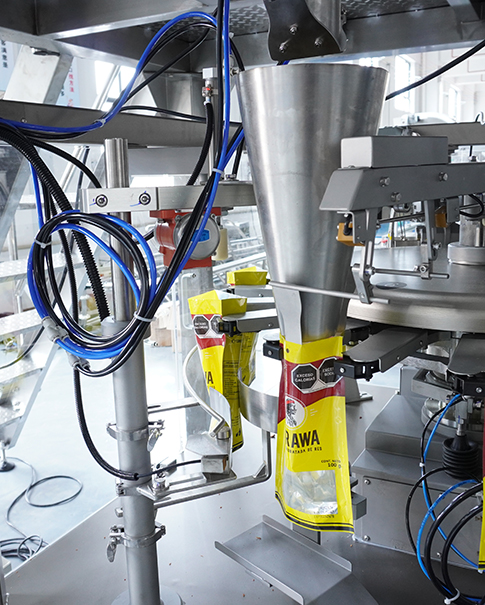

Choosing the right automatic cartoning machine is an important decision for any manufacturer looking to improve packaging efficiency. An automatic box packing machine can reduce manual labor, improve packaging consistency and connect with other equipment to create a more efficient packaging line.
However, choosing a machine based only on its maximum speed or purchase price can lead to problems after installation. Product dimensions, carton specifications, feeding methods, production capacity, changeover requirements and packaging line integration all need to be considered before making a decision.
So, how do you choose the right automatic cartoning machine for your production needs?
This guide explains the key factors you should evaluate before purchasing a cartoning machine and provides a practical checklist to help you communicate with a packaging machine manufacturer.
1. Define Your Product and Packaging Requirements First
The first step is to clearly understand the product that the automatic cartoning machine needs to handle.
Different products have different shapes, sizes and feeding requirements. A cartoning machine designed for one type of product may not be suitable for another product without changes to the feeding and loading system.
Product dimensions and shape
Before contacting a manufacturer, prepare the basic product information, including:
• Product length
• Product width
• Product height
• Product weight
• Product shape
• Product stability
For example, a stable rectangular product may be easy to feed into a carton using a standard conveyor and pushing system. Small bags, bottles, tubes or irregular products may require a different feeding system.
Number of products per carton
You should also determine how many products need to be placed into each carton.
The packaging requirement may be one product per carton, several products per carton or a combination of products and accessories. The number of products in each carton affects the product feeding system and the machine configuration.
Product feeding method
The cartoning machine may receive products from different types of equipment, such as a filling machine, labeling machine, pouch packing machine, conveyor or automatic feeding system.
If the cartoning machine is part of an automated production line, the product transfer method should be considered at the beginning of the project.
The right machine should not only load the product into the carton correctly. It should also receive products smoothly from the upstream equipment.
2. Check the Carton Size and Carton Style
The carton is just as important as the product when selecting an automatic cartoning machine.
A manufacturer needs accurate carton information to determine whether the carton can be opened, loaded and closed reliably.
Carton dimensions
The main carton dimensions normally include:
• Carton length
• Carton width
• Carton height
• Paperboard thickness
• Carton material
You should also provide the acceptable size tolerance if available.
Small differences in carton dimensions or carton quality can affect machine performance, especially when the packaging line operates at high speed.
Carton style
Different cartons may use different structures and closing methods. For example, some cartons use tuck ends, while others use glue or other closing methods.
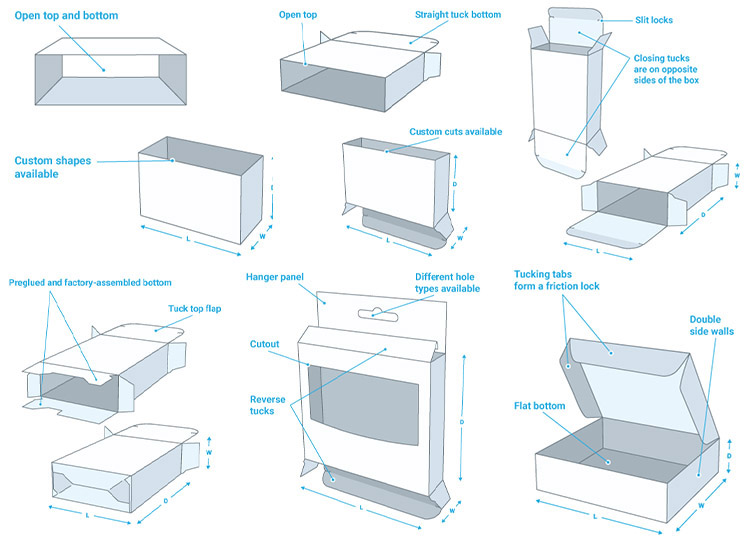 Box Type
The carton structure affects the design of the carton opening and closing systems.
For this reason, the carton sample is often more useful than dimensions alone when evaluating a cartoning machine.
If possible, provide actual carton samples to the machine manufacturer before placing an order.
3. Match the Machine Speed With Your Real Production Requirements
Production speed is one of the first specifications that buyers usually look at. However, the highest machine speed is not always the best choice.
The actual output of a cartoning machine can be affected by the product, carton, feeding system and operating conditions.
Maximum speed is not the same as actual output
A manufacturer may specify a maximum speed based on specific product and carton conditions. Your actual production speed may be lower depending on your application.
Factors that can affect actual output include:
• Product feeding speed
• Carton quality
• Product dimensions
• Carton dimensions
• Product stability
• Changeover frequency
• Operator intervention
• Upstream equipment speed
Therefore, you should discuss your required production output with the manufacturer instead of choosing a machine only according to its maximum speed.
Calculate your required production capacity
For example, if your production target is 20,000 cartons per day and your available production time is 8 hours, the average required output is about 42 cartons per minute.
The calculation can be expressed as:
Required cartons per minute = Required daily output ÷ Available production minutes
It is also important to consider production downtime, product changes and normal operating conditions when setting the target speed.
Match the cartoning machine with the upstream equipment
The cartoning machine should work smoothly with the equipment before it.
For example:
Sachet Packing → Product Feeding → Cartoning → Case Packing → Carton Sealing → Palletizing
If the cartoning machine is much slower than the upstream equipment, it may become a bottleneck. If it is much faster, the additional capacity may not provide meaningful benefits unless the rest of the line can also support the higher output.
The goal should be a balanced packaging line rather than the highest speed from a single machine.
4. Choose the Right Cartoning Machine Type
Another important factor is the type of cartoning machine.
Horizontal and vertical cartoning machines use different product feeding and loading methods. The right choice depends on the product, carton design and production requirements.
Horizontal cartoning machine
A horizontal cartoning machine generally feeds the product horizontally into the carton.
This type of machine can be suitable for products that can be transported and pushed horizontally without affecting their shape or quality.
Applications may include bags, boxes, bottles, tubes and other products depending on their dimensions and packaging requirements.
Vertical cartoning machine
A vertical cartoning machine loads products into cartons from a vertical direction.
This type of machine can be suitable for products that are better handled from above or products that can be placed into an open carton vertically.
How should you choose?
There is no single cartoning machine type that is suitable for every product. The choice should be based on:
• Product shape
• Product dimensions
• Product characteristics
• Carton structure
• Loading method
• Required production speed
• Available factory space
A professional manufacturer should evaluate these factors before recommending a machine.
5. Consider Changeover Requirements and Future Product Variations
If your factory produces several products, changeover requirements should be considered before purchasing a cartoning machine.
How many carton sizes do you need?
First determine whether the machine will run:
• One product and one carton size
• Several products with the same carton size
• Several carton sizes
• Several product sizes
• Different carton formats
The more product and carton variations you have, the more attention should be paid to machine adjustment and changeover.
How often will you change products?
If the production line changes products several times a day, a machine that is easy to adjust can help reduce downtime.
Ask the manufacturer about:
• Adjustment methods
• Changeover time
• Format parts
• Operator access
• Parameter settings
Consider future production plans
You should also think about whether new products may be added in the future.
However, it is not always necessary to purchase the most complex machine just because you may introduce new products someday.
The better approach is to discuss your current products and realistic future requirements with the manufacturer. This helps create a machine configuration that provides the functions you need without unnecessary complexity.
6. Evaluate Packaging Line Integration
An automatic cartoning machine is often one part of a complete packaging line.
If you are planning a fully automated production line, integration should be considered before purchasing individual machines.
Upstream equipment
Depending on the application, the cartoning machine may connect with:
• Filling machines
• Pouch packing machines
• Bottle filling machines
• Labeling machines
• Product conveyors
• Automatic feeding systems
The product should be transferred to the cartoning machine at a stable and consistent speed.
Downstream equipment
After cartoning, the products may continue to:
• Case packing
• Carton sealing
• Palletizing
• Shrink wrapping
• Other end of line packaging processes
The cartoning machine should therefore be designed with the complete production process in mind.
Communication and synchronization
For an automated line, different machines need to work together.
The project may require coordination between conveyors, product feeding systems and control systems. The machine manufacturer should explain how the cartoning machine will communicate with other equipment and how the production line will respond to product shortages, carton shortages or machine stops.
A cartoning machine should be evaluated as part of the complete packaging line rather than as an independent machine.
7. Look at Machine Construction, Control System and Ease of Operation
Machine structure and control systems also affect long term operation.
Machine Construction
When evaluating a cartoning machine, pay attention to:
• Machine frame
• Safety guarding
• Accessibility
• Cleaning convenience
• Maintenance access
• Material used for relevant machine parts
For industries with strict hygiene requirements, the machine design and materials should also match the production environment.
PLC Control
A PLC control system can coordinate different machine functions and help maintain stable operation.
Touchscreen HMI
A touchscreen interface can make it easier for operators to:
• Set machine parameters
• Monitor machine status
• Adjust production settings
• Check fault information
The important point is not simply which control components are used. You should also consider whether operators can understand and use the system efficiently.
Safety and Operator Access
The machine should provide appropriate safety protection and convenient access for routine operation and maintenance.
A machine that is easy to operate and maintain can help reduce unnecessary downtime during daily production.
8. Consider Maintenance, Spare Parts and After Sales Service
The purchase price is only one part of the investment. Long term service and maintenance can also have a significant effect on the total operating cost.
Ask about routine maintenance
Before purchasing the machine, ask the manufacturer about:
• Regular maintenance requirements
• Cleaning procedures
• Lubrication
• Wear parts
• Recommended inspection intervals
You should know what maintenance work needs to be performed by operators and what work requires technical support.
Check spare parts availability
Ask which spare parts are recommended for regular production.
It is useful to understand:
• Which parts are commonly replaced
• Which parts should be kept in stock
• How spare parts can be ordered
• Expected supply time
Having important spare parts available can help reduce downtime.
Evaluate technical support
A reliable manufacturer should be able to provide appropriate technical support throughout the project. This may include:
• Machine installation guidance
• Commissioning support
• Operator training
• Remote technical support
• Troubleshooting
• Spare parts support
When comparing manufacturers, consider the service provided after the machine leaves the factory, not only the equipment price.
9. Test the Machine With Your Actual Product and Carton
Testing is one of the most important steps before purchasing an automatic cartoning machine.
Machine specifications can provide useful information, but actual testing can provide a better understanding of how the machine will perform with your products.
What should be tested?
A machine test can include:
• Product feeding
• Carton picking
• Carton opening
• Product insertion
• Carton closing
• Production speed
• Continuous operation
• Changeover
• Product and carton rejection
The exact test items should depend on your packaging requirements.
Why are actual product tests important?
Two products with similar dimensions may behave differently during feeding and loading.
The same applies to cartons. Different paperboard materials, carton structures and manufacturing tolerances can affect the performance of the cartoning machine.
For this reason, actual product and carton testing can help identify potential problems before installation.
When communicating with a manufacturer, providing product samples, carton samples, drawings, photos and production requirements can make the machine evaluation more accurate.
10. Compare Total Cost of Ownership, Not Just Machine Price
Price is naturally an important factor when buying a cartoning machine. However, comparing only the initial purchase price may not give you a complete picture.
Initial machine cost
Compare the basic machine configuration and understand exactly what is included in the quotation.
Format parts and tooling
If your products use different carton sizes, additional format parts or adjustments may be required.
Installation and commissioning
Ask whether installation, commissioning and operator training are included in the project.
Maintenance and spare parts
Consider the expected maintenance requirements and spare parts costs during long term operation.
Labor requirements
Automation can reduce manual packaging work and help maintain consistent production.
Production efficiency
A machine with stable operation, suitable speed and convenient changeover may provide greater value over its service life.
The lowest initial price does not always mean the lowest total cost. When comparing suppliers, consider the complete cost of purchasing, operating and maintaining the machine.
Automatic Cartoning Machine Buying Checklist
Before making a purchase, you can use the following checklist to organize your requirements.
Item What to Confirm
| Product | Product size, shape and weight |
| Carton | Carton size, structure and material |
| Capacity | Required cartons per minute |
| Feeding | Product feeding method |
| Machine Type | Horizontal or vertical |
| Changeover | Number of products and carton sizes |
| Integration | Upstream and downstream equipment |
| Control | PLC and HMI system |
| Testing | Actual product and carton testing |
| Maintenance | Routine maintenance and spare parts |
| Service | Installation and technical support |
| Future Needs | Possible future products and carton formats |
Providing this information to a cartoning machine manufacturer can make the equipment selection process more efficient and help the manufacturer recommend a more suitable solution.
Questions to Ask an Automatic Cartoning Machine Manufacturer
Before placing an order, it is useful to ask the manufacturer several practical questions.
1. Can the machine handle my product?
The manufacturer should evaluate the product dimensions, shape, weight and feeding characteristics.
2. What carton sizes can the machine handle?
Confirm the acceptable carton length, width, height and carton material. Provide actual carton samples whenever possible.
3. What is the actual production speed?
Ask about the expected production speed under your actual product and carton conditions instead of looking only at the maximum machine speed.
4. Can the machine handle different carton sizes?
If you have several products or carton sizes, ask how the machine will be adjusted and whether additional format parts are required.
5. How long does changeover take?
Ask about the actual changeover process and whether operators need tools for adjustments.
6. Can the machine connect with my existing packaging line?
Provide information about the upstream and downstream machines so the manufacturer can evaluate the complete production process.
7. Can you test my product and carton before ordering?
Actual testing is strongly recommended when product or carton characteristics may affect machine performance.
8. What spare parts should I prepare?
Ask the manufacturer for a recommended spare parts list based on your expected production conditions.
What installation and after sales support do you provide?
Understand the manufacturer's responsibilities for installation, commissioning, training and technical support before placing the order.
Why Choose Jason Machinery for Your Cartoning Solution?
Choosing a cartoning machine is not only about finding a machine with a suitable speed. It is about finding a packaging solution that matches your product, carton and production process.
At Jason Machinery, we focus on understanding the actual packaging requirements before recommending equipment. Product dimensions, carton specifications, production capacity, feeding methods and packaging line requirements can all be considered during the machine selection process.
For projects that require more than one packaging process, Jason Machinery can also help develop a complete packaging solution. Depending on the application, the production line can include filling, labeling, cartoning, case packing, carton sealing and palletizing equipment.
We also recommend testing the machine with the customer's actual product and carton whenever practical. This helps evaluate product feeding, carton opening, product loading and carton closing before the equipment is finalized.
From equipment selection to installation, commissioning and technical support, the goal is to provide a practical cartoning solution for each customer's production requirements.
Conclusion
Buying an automatic cartoning machine is a long term investment. The right choice should be based on more than machine price or maximum speed.
Before making a decision, evaluate your product, carton specifications, production capacity, machine type, changeover requirements, packaging line integration, control system, maintenance needs and after sales service.
Most importantly, test the machine with your actual product and carton whenever possible.
A suitable automatic cartoning machine should provide stable operation, meet your production requirements and work smoothly with the rest of your packaging line.
If you are planning to purchase an automatic cartoning machine, Jason Machinery can help evaluate your product, carton specifications and production requirements and recommend a suitable cartoning solution.
Send us your product details and carton specifications to discuss your cartoning project.



WhatsApp : +86-13266347573
Email : info@fsjspm.com
Tel : +86-13266347573